
Core Aeration in Austin and Central Texas
Central Texas soil compacts harder than almost anywhere else in the country, and compacted soil is the reason a lawn can be watered on schedule, fertilized on time, and still thin out every summer. Water runs off instead of soaking in. Roots stay shallow. The fertilizer you paid for never reaches them.
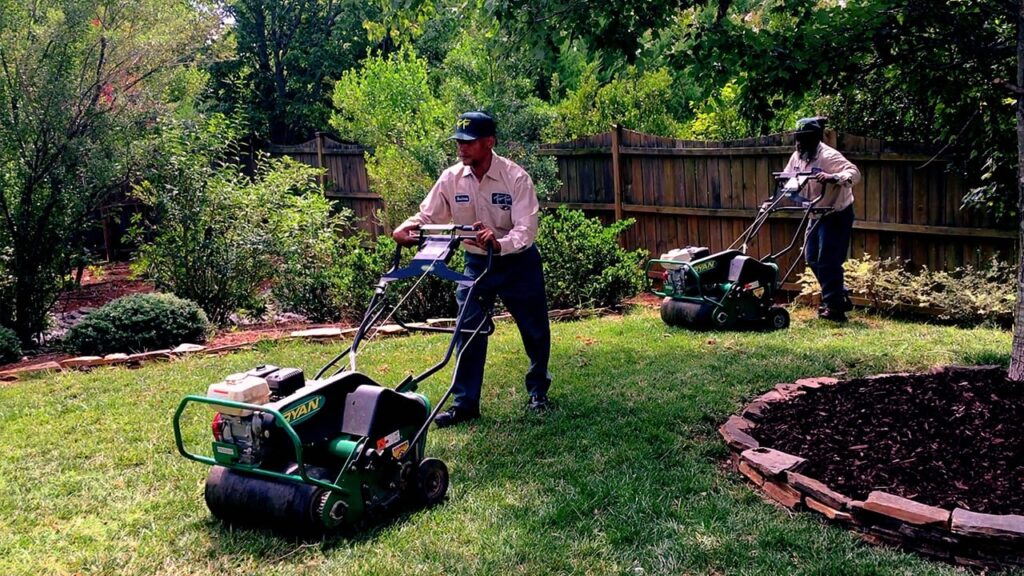
Core aeration is the mechanical fix: pulling plugs of soil out of the lawn so water, air and nutrients can move down. Below is when it actually works here, when it does not, and what has to happen afterward for it to be worth the money.
Core aeration, not spike aeration
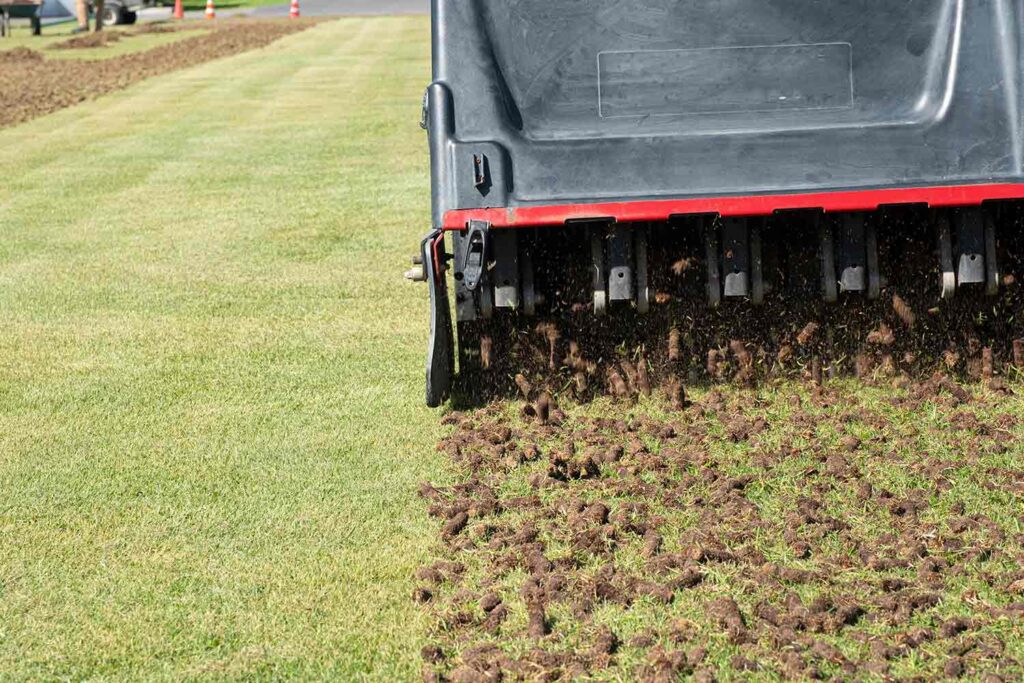
These get confused constantly and they are not the same job. Core aeration removes plugs of soil and leaves open channels. Spike aeration — the sandals with nails, the rolling spike tools — just pushes soil sideways. On heavy clay that makes compaction worse by pressing the walls of each hole tighter.
If someone quotes you aeration, ask whether the machine pulls cores. On Central Texas soil, nothing else is worth doing.
Why our soil makes this non-optional
Blackland clay: Hutto, Pflugerville, East Austin
Deep, heavy clay that swells when wet and shrinks and cracks when dry. That cycle compacts it season after season. Foot traffic, mowers and construction leftovers make it worse. This is the soil where aeration pays for itself fastest, and where a quarter inch of compost after aeration genuinely changes the soil over two or three seasons.
Caliche over limestone: Cedar Park, Leander, Bee Cave
Thin soil over rock, sometimes only a few inches deep. Aeration here is about breaking the compacted surface layer and getting organic matter into what little soil there is. Plug depth matters: a machine set too deep just hits rock. The operator has to know the property.
When to aerate in Central Texas
The rule underneath the calendar is simple: aerate while the grass is actively growing, so it can heal and fill the holes. Aerate dormant grass and you have opened the lawn to weeds with nothing to close it.
Warm-season grass
Bermuda, St. Augustine, Zoysia and Buffalo — which is nearly every lawn in this area. Active growth runs from late spring through early fall, and late spring to early summer is the ideal window. Early fall still works while the grass is growing, but the later you go the less recovery time it has.
Cool-season grass
Mostly ryegrass used for winter overseeding here. If that is what you are maintaining, fall is the correct window. Aerating cool-season grass in the heat of a Texas summer stresses a lawn that is already struggling.
One more condition that matters more than the month: soil moisture. Aerate ground that is slightly moist, not soaking and not concrete-dry. On dry blackland clay the tines will not penetrate; on saturated clay the plugs smear closed. Watering a day or two beforehand is usually the difference between a real aeration and an expensive lawn massage.
Signs your lawn needs it
- Water pools or runs off instead of soaking in
- The lawn thins in the same spots every year
- A screwdriver will not push into the soil easily
- Grass looks stressed days after watering
- Heavy foot traffic areas, play zones, dog runs
- New construction, where topsoil was scraped and equipment compacted what was left
What happens after matters as much as the aeration
Leave the cores where they fall. They look untidy for a week or two, then break down and return soil and microbes to the lawn. Raking them up throws away half the benefit.
Top-dress with compost. About a quarter inch worked across the surface right after aeration is what turns aeration from a one-season improvement into permanent soil change. The compost falls into the open channels instead of sitting on top. On blackland clay, two or three seasons of this genuinely improves drainage.
Fertilize and water afterward. The channels are open and nutrients reach roots directly. If you were going to feed the lawn anyway, doing it right after aeration is when it counts most.
How often
Most Central Texas lawns benefit from once a year. Heavy clay, heavy traffic, or a lawn that has never been aerated may want twice in the first year and then settle into annual. Sandy or genuinely loose soil can go every two or three years, but that soil is rare around Austin.
How we do it
We check soil moisture before scheduling, set plug depth for your soil rather than a default, and pair the aeration with compost top-dressing so the work compounds. We serve Austin, Cedar Park, Leander, Round Rock, Georgetown, Pflugerville, Hutto and the surrounding area.
Aeration pairs naturally with lawn care and irrigation: opening the soil is wasted if the sprinkler coverage is uneven or the mowing height is wrong.
Frequently asked questions
When is the best time to aerate a lawn in Central Texas?
While warm-season grass is actively growing, so it can close the holes. Late spring to early summer is the ideal window here. Early fall still works but leaves less recovery time. Aerating dormant grass opens the lawn to weeds with nothing growing to close it.
How often does a lawn need core aeration?
Most Central Texas lawns benefit annually. Heavy clay, high traffic, or a lawn that has never been aerated may want twice in the first year, then annually. Genuinely loose soil can go every two or three years, but that soil is rare around Austin.
Should I pick up the plugs afterward?
No. Leave them where they fall. They look untidy for a week or two, then break down and return soil and microbes to the lawn. Raking them up throws away a large share of the benefit.
Is spike aeration as good as core aeration?
No, and on clay it makes things worse. Spike aeration pushes soil sideways and presses the walls of each hole tighter. Core aeration removes plugs and leaves open channels. If someone quotes aeration, ask whether the machine pulls cores.
What should I do right after aerating?
Top-dress with about a quarter inch of quality compost so it falls into the open channels, and fertilize if you were planning to. That combination is what turns aeration from a one-season improvement into permanent soil change.
Get a core aeration quote
Tell us your grass type and where you are. We will tell you the right window for your lawn and what the job costs.