

A small front lawn costs nearly as much to irrigate per square foot as a large one and delivers almost none of the use. It is the easiest place in an Austin yard to stop watering grass without missing it.
What replaces it
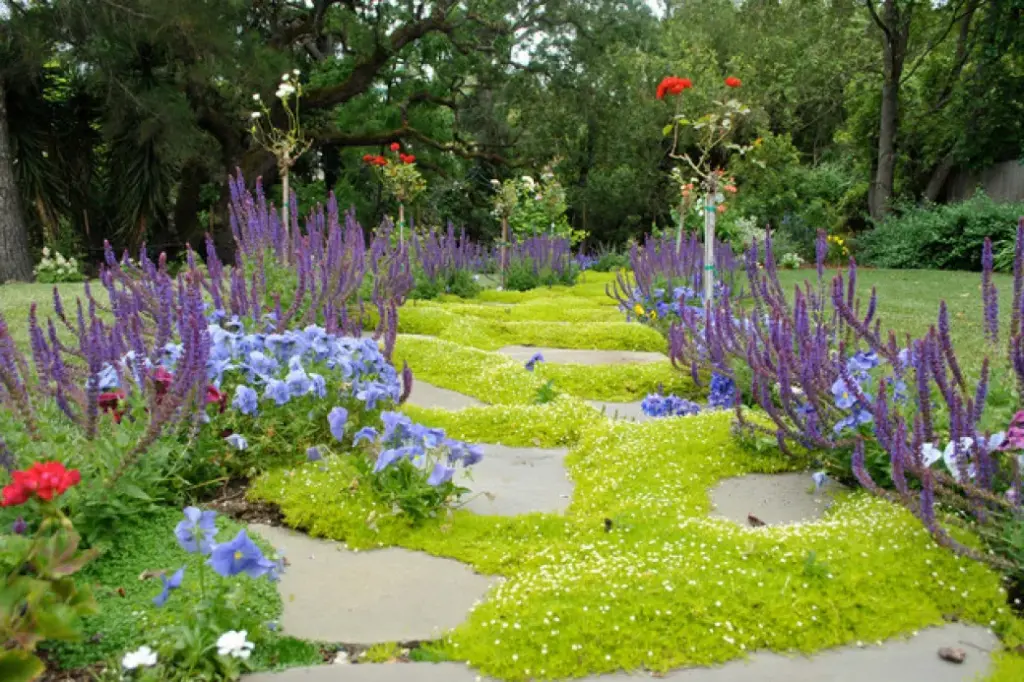
Native ground covers handle the areas nobody walks on. Frogfruit spreads and takes light foot traffic. Silver ponyfoot brightens shade under a canopy. Sedges work where grass sulks in dappled light.
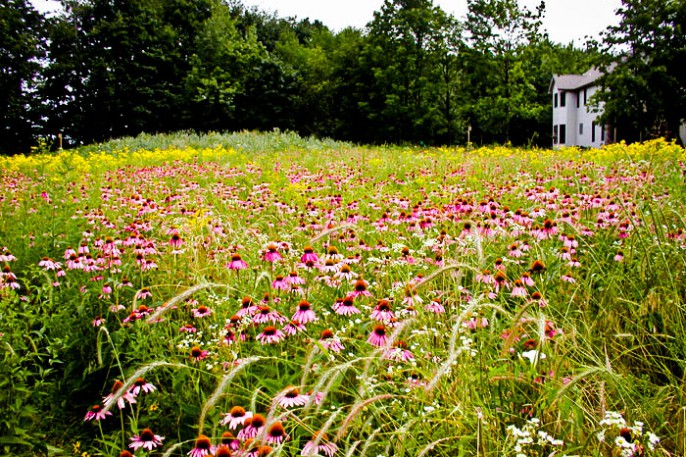
For structure, mass a few natives rather than dotting one of everything: autumn sage, blackfoot daisy, damianita, and muhly grasses for fall texture. Three species repeated reads as design. Fifteen singles reads as a collection.
Paths and edges do the heavy lifting
Decomposed granite is the local standard for paths: permeable, inexpensive and correct against limestone. It migrates, so it needs edging and a top-up every few years.
Edges are what separate a designed yard from a neglected one. A defined steel or stone edge between bed and walkway makes the same plants look deliberate. Without it, natives read as weeds to a neighbor and sometimes to an HOA.
The HOA question
Under Texas Property Code section 202.007, a property owners association may not prohibit drought-resistant landscaping or water-conserving turf. They can require a plan for approval and enforce reasonable standards, but a blanket ban is not enforceable.
In practice, submitting a drawn plan with defined edges and massed planting gets approved far more often than a vague request. Our plant guide covers what actually survives here, and landscape design if you want the plan drawn.
What it costs and what it saves
Converting a front lawn is not free. Removing turf, preparing soil, buying plants and installing edging and paths costs more up front than another season of mowing. The return comes from water, mowing labor and replacement plants you stop buying.
Austin Water rebates for turf conversion offset part of it, and they generally require pre-approval before work begins, so applying first matters. Verify current terms directly with the utility since amounts change.
The payback is fastest on small front yards precisely because the install cost scales with area while the irrigation savings per square foot stay similar. A small yard converts cheaply and stops costing you immediately.
The first year decides whether it works
The most common failure is treating a native planting as maintenance-free from day one. It is not. Those plants need regular water through their first full summer to push roots down, and skipping that loses plants that would have needed almost nothing afterward.
Plant in fall if you can, so roots develop through the cool months before the first triple-digit day. Mulch well and keep mulch off the stems.
Expect to weed more in year one than in year three. Bare soil between young plants invites colonizers, and the answer is denser planting and mulch rather than herbicide. By the time the plants close together, the weeding largely stops.
Tired of watering a lawn nobody uses?
Front yard conversions are the fastest payback in an Austin landscape.