
Austin rainfall arrives in bursts rather than steadily, which is exactly the pattern rainwater harvesting is good at capturing. The question is whether the numbers work on your roof.
What a roof actually produces
The rough rule is that one inch of rain on 1,000 square feet of roof yields around 600 gallons. A modest Austin house can therefore fill a large tank in a single decent storm, which surprises most people.
If your own system needs work, we handle sprinkler system installation and repair in Austin with licensed irrigators.
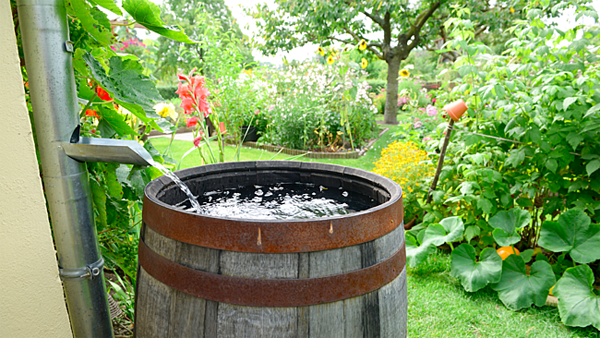
The constraint is not collection, it is storage. Rain here falls in concentrated events with long gaps between, so a small barrel fills and overflows in the first ten minutes and then sits empty through the dry weeks when you actually need it.
Sizing honestly
A single 50-gallon barrel is a gardening convenience, not a water strategy. It waters containers and a few beds. If your goal is meaningful irrigation, sizing moves into the hundreds or thousands of gallons and becomes a design decision about where the tank goes and how it looks.
Match the tank to the use. Hand-watering beds and containers needs far less than supplementing an irrigation system, and buying more capacity than you will draw down is money sitting in a tank.
Rebates and where the water helps most
Austin Water offers rebates for rainwater collection systems, and separate incentives for irrigation upgrades and turf conversion. These generally require pre-approval before purchase or installation, so buy after applying rather than before. Verify current amounts directly with Austin Water, since terms change yearly.
Harvested water is best spent where it matters most and quantity is smallest: establishing new plants through their first summer, and containers that dry fastest. Pair it with low-water planting and the stored volume goes much further.
Components and what they actually cost
A functioning system is more than a barrel. You need gutters and downspouts in good condition, a first-flush diverter to send the dirtiest initial runoff away, an inlet screen to keep debris and mosquitoes out, an overflow route for when the tank fills, and a way to get water out, either gravity or a pump.
Gravity is free but slow and limits where you can use the water. A small pump makes the system genuinely usable with a hose or drip line, and is usually worth including from the start rather than adding later.
Placement matters: full tanks are extremely heavy, so the pad needs to be level and solid, and the location needs to make sense visually since you will be looking at it for years.
Rules, mosquitoes and water quality
Texas is generally supportive of rainwater harvesting, and there are state-level provisions encouraging it, but local requirements around placement and connections still apply. Check with your utility and, if applicable, your HOA before installing a large tank.
Mosquitoes are the practical concern people worry about, and they are entirely preventable: sealed inlets, fine screening on every opening, and no standing water in gutters or around the base. A properly closed system does not breed them.
Harvested rainwater is excellent for irrigation and for plants that dislike alkaline tap water, since rainfall is naturally soft and slightly acidic. It is not potable without treatment, and it should not be plumbed into the house without the appropriate protections.
Thinking about a rainwater system?
We will size it against your roof and what you actually plan to water.