
A path is the most-used surface in most yards and the one people choose last. Here is how the realistic options actually compare in Central Texas conditions.
Decomposed granite
The regional default. Cheapest of the permeable options, drains well, stays cooler than concrete, and the color belongs against limestone. It migrates, so it needs edging and topping up every few years, and weeds germinate in the fines.
Planning something like this for your own yard? Our team does landscape design and installation in Austin, from the first sketch to the last plant.
Stabilized versions with a binder cost more and move far less. On any real slope, use stabilized or terrace with steps, because plain material washes.
Flagstone and stone
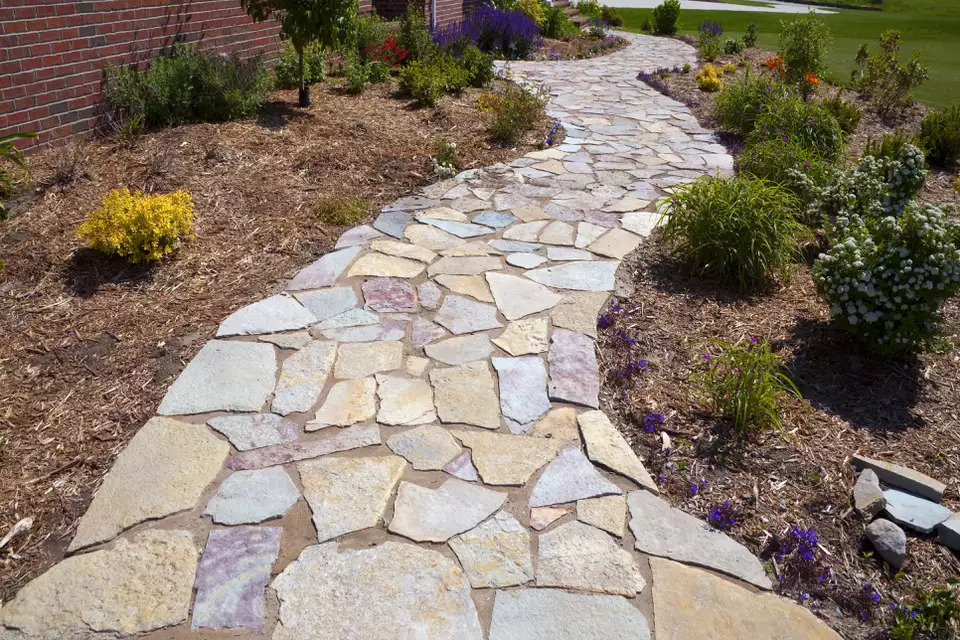
The most attractive option and the most expensive. Set in decomposed granite or sand it stays permeable; mortared on a slab it does not. Locally quarried limestone and Oklahoma flagstone are both common here.
Practical warning: light-colored stone gets very hot underfoot in an Austin August, which matters around pools and on barefoot routes. Uneven stone also complicates access for anyone with mobility issues.
Pavers and concrete
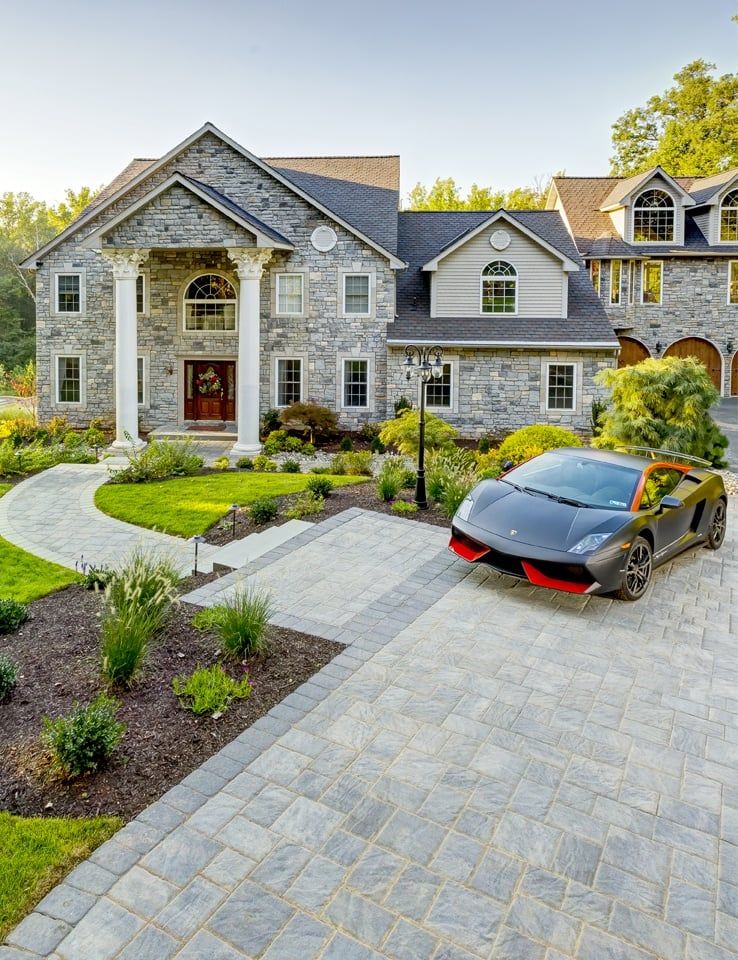
Pavers give a clean finish and can be lifted and reset if the ground shifts, which on blackland clay is a genuine advantage. Cost sits between granite and flagstone. Joints need occasional sand and weed attention.
Poured concrete is the most durable and the least forgiving. On expansive clay it will crack eventually, and control joints determine whether it cracks where you planned. It also stores and radiates heat, which makes a wide concrete area uncomfortable in summer. See concrete work and hardscaping for how each is built.
Choosing by use, not by looks
Match material to traffic. A garden path walked occasionally can be granite. The route from driveway to front door, used daily and in the rain, deserves stone or pavers. Anything carts or wheelchairs use needs a firm, even surface.
Width matters as much as material: a path two people can walk side by side reads as designed, one that forces single file reads as an afterthought. And every permeable material needs edging, or it will slowly disappear into the beds.
Base preparation for each material
Every path fails from underneath. Decomposed granite and gravel need a compacted aggregate base, several inches deep, compacted in layers. Skipping that produces a surface that ruts and disappears into the soil within a season.
Flagstone set dry needs a compacted base plus a levelling layer of granite or sand. Mortared stone needs a concrete slab, which converts it into an impervious surface with all the drainage and permit implications that carries over the recharge zone.
Pavers need the deepest and most carefully compacted base of the group, plus edge restraint. On blackland clay, geotextile fabric between soil and base stops the two mixing over time, which is what causes settling years later.
Width, slope and accessibility
Primary paths should be wide enough for two people, roughly four feet. Secondary garden paths can be narrower. A main entry path at two feet wide reads as an afterthought no matter how good the material is.
Cross slope matters for drainage: a slight fall to one side sheds water instead of ponding. Longitudinal slope matters for comfort and access. Anything approaching a steep grade needs steps rather than a ramp of loose material.
If anyone using the path has mobility limitations, or you use a wheelbarrow or cart regularly, that rules out loose material and uneven flagstone. Firm, even and continuous is the requirement, and it is worth deciding before choosing on appearance.
Edging is not optional
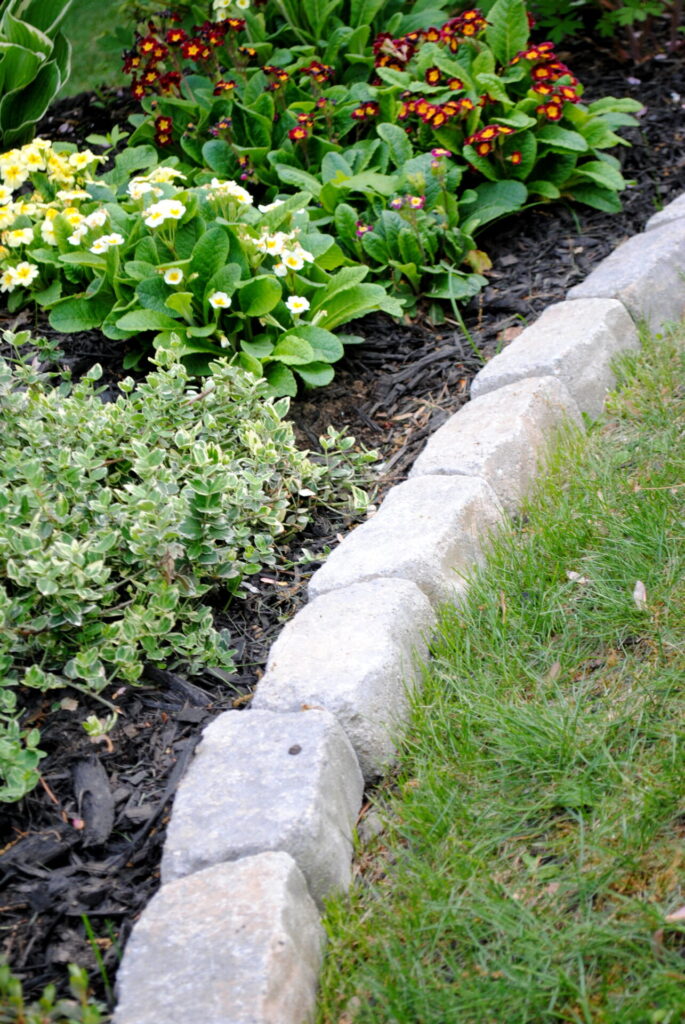
Every permeable material migrates. Steel edging is nearly invisible and holds a clean line indefinitely. Stone edging becomes a design element. Plastic edging heaves in our clay and works its way out of the ground within a few seasons.
Without edging, decomposed granite and gravel spread into beds and lawn, the path narrows year by year, and you top up more often than you should. It is the least visible part of the budget and one of the highest return.
Edging also gives mowers something to run against, which keeps the boundary crisp with no extra effort. That crispness is a large share of what makes a yard read as maintained.
Common questions we get about this
Three come up almost every time.
Can I do this myself? Usually part of it. The diagnostic work and the finishing details are where experience shows, and the preparation underneath is where shortcuts cost the most. Most homeowners who do it themselves succeed on the visible work and struggle with base preparation, drainage and timing.
When is the best time? In Central Texas, almost always autumn. Soil is still warm, air has cooled, and anything planted or installed has months to settle before summer stress arrives. Spring works but races the heat.
What does it cost? Any number quoted without seeing the property is a guess, because our two soils, the slope and the access change the work substantially within a few miles. What we can say is that the invisible preparation is where the real cost sits, and where the cheapest bid has usually economized.
Planning paths or a patio?
We will tell you honestly which material suits the use, not just the photo.