

Fall armyworm control in Austin is a timing problem before it is a product problem. The moths arrive most years in late summer and again in fall, they lay in clusters, and the caterpillars hatch together and develop at roughly the same pace. For a few days they chew blades in the open. After that they sit at the crown, and the treatment that worked on Monday does very little on Thursday.
The failure we see most is not a bad product, it is a bad diagnosis. Turf goes off-color near a curb, the homeowner assumes heat, and the irrigation runs an extra cycle. The patch keeps growing, and by the time anyone kneels down and looks, the lawn is past the easy stage.
Planning something like this for your own yard? Our team does landscape design in Austin, TX, from the first sketch to the last plant.
A gallon of water and a squirt of dish soap will settle it in about ten minutes. Here is how to run the test, what the answer means, and what to do while the window is still open.
Why the window is roughly two days
Small caterpillars sit on the blade surface and scrape the green, which reads as thin, translucent window-paning. They are exposed, they are eating what you spray, and they are easy to kill. Once they put on size, usually within a few days, they move down to the crown and come up at night to feed. A spray that lands on the blade now wets the part they are no longer eating. The damage changes with them: tillers come loose, and a lawn that looked thin on Friday is bare dirt by Wednesday.
The 48 hours is not a magic number and we would not sell it as one. It is the usual gap between a caterpillar on a blade and a caterpillar at the crown — the gap where the cheap treatment still works. Eggs hatch in waves, so a lawn can go through this twice in a month.
Run the soap flush
You need a gallon of water, a squirt of plain liquid dish soap, and a spot where brown meets green. Skip the bleach-based and degreaser soaps. Mix, then pour slowly over roughly a square foot at the edge of the damage — not the dead center, where nothing is left to find. Wait three or four minutes.
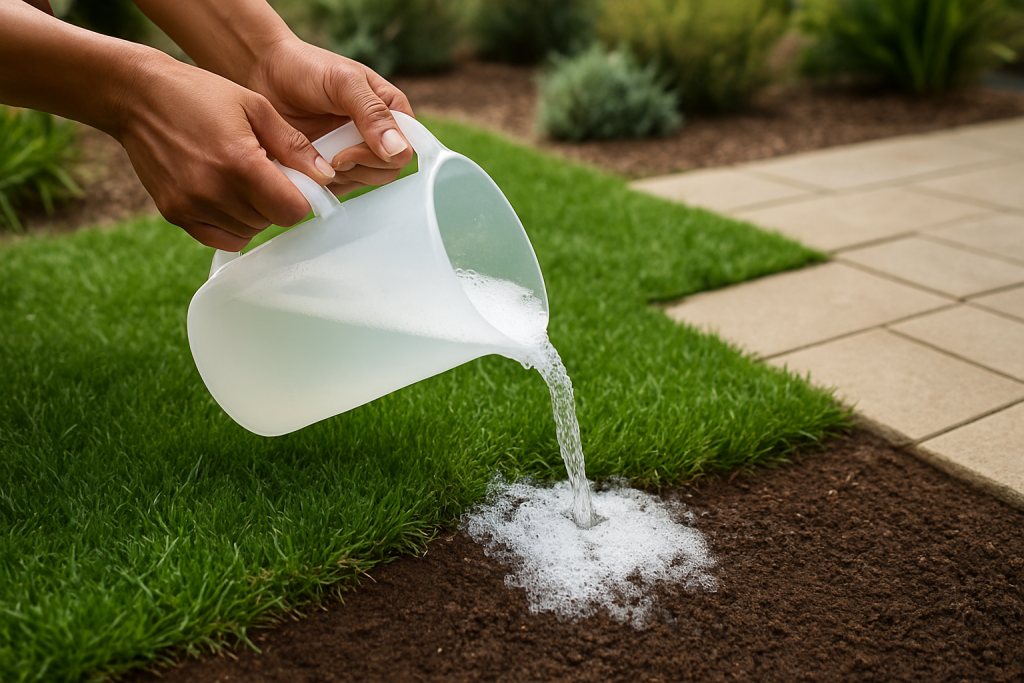
Do it in three places, morning or evening. One flush that comes up empty proves nothing, because the caterpillars are patchy and you may have picked the wrong edge. Dish soap at this strength is a diagnostic, not a control; treating with it is how people lose a week.
What a positive flush looks like
Small caterpillars, from barely visible to about half an inch, pale green to nearly black, with a light stripe down each side and an inverted Y on the face. They curl into a C when disturbed. Look for frass too — small, pepper-like pellets in the thatch — and birds working the same patch.
What drought stress looks like instead
Drought browns a lawn in patterns: full sun first, the slope, the far throw of the sprinkler. Blades fold lengthwise, footprints stay, and the crown is firm when you tug a handful. No frass, and the flush gives you a wet patch and nothing else. The tug test confirms it — armyworm grass lifts like a loose rug, drought grass holds and comes up limp.
Why sprays miss the ones that matter
Two things beat an ordinary spray: location and timing. At the crown stage the caterpillar is not on the leaf. It sits in the thatch at the base of the tiller, and anything that stays on the surface misses it. That is how a lawn gets sprayed twice and still gets worse. They also feed at night, so a midday application sits in the sun, degrades, and is dry before they come up.
The product matters less than the placement. Bacillus thuringiensis and similar biologicals only work when the caterpillar eats them, which suits small larvae on blades and not much else. Contact products have to reach the insect, so the material has to get into the thatch. If the label says irrigate it in, irrigate it in. Mow first, then stay off the mower for a few days.
What actually stops the chewing at the crown
Our line is simple: if a square-foot flush brings up more than a couple, treat. If it brings up one, flush again in two days rather than spending the money now.
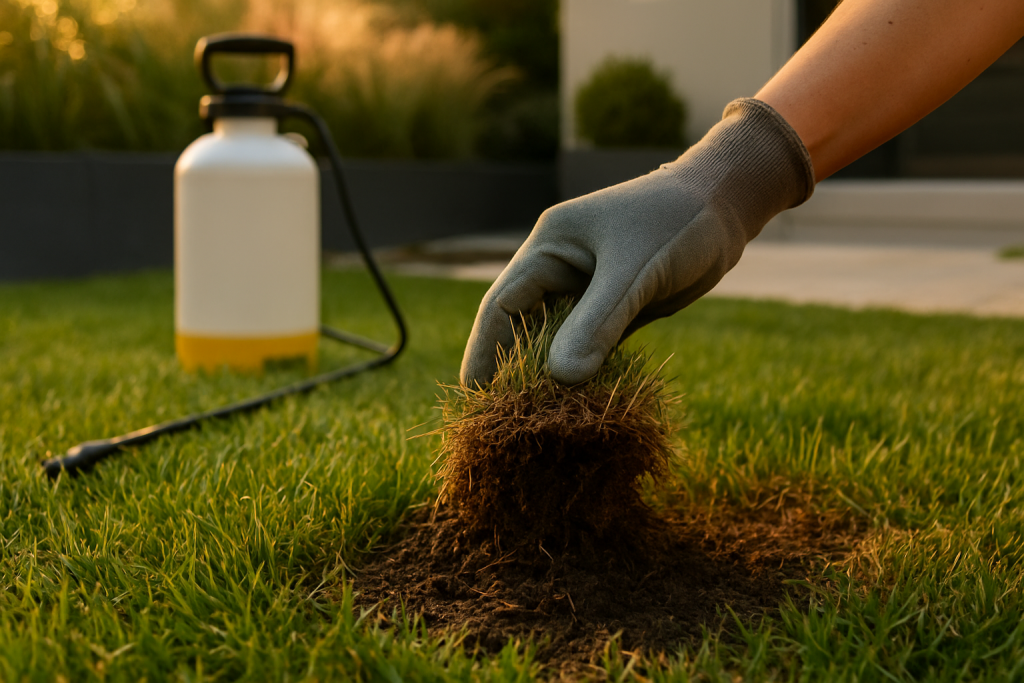
Cover the damaged patch and a strip of green around it. The border is where the next wave is. The application that works is the one that reaches the crown — late in the day, mixed and watered exactly as the label says, on thatch that is not matted enough to soak up the whole application before it gets down.
Then wait. Do not fertilize to force top growth on a lawn that has just been chewed; let the new blades come. Keep watering on the normal schedule, not double, and flush again in three to five days.
The honest part: if the crown is eaten, no treatment brings that tiller back. That is sod or seed, and early fall is usually the better window for either. See how we work: Innovation Grounds.
FAQ
Can I do this myself?
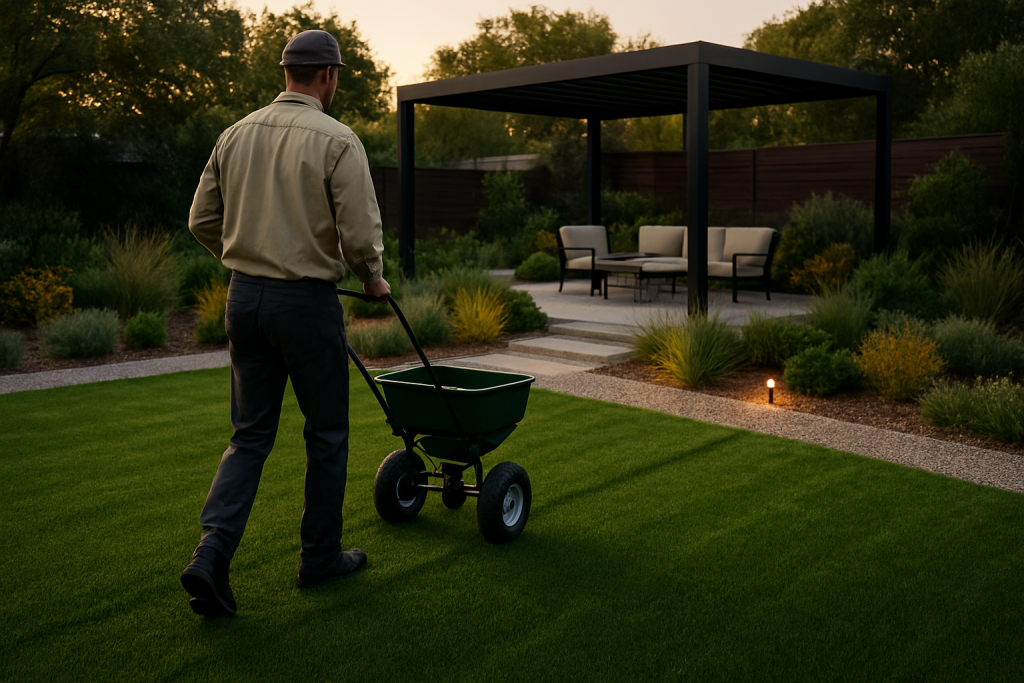
Yes. The flush is a gallon of water and a squirt of dish soap, and it is the same test we run. Treatment is also within reach if you read the label, apply late in the day, and water it in. What most people get wrong is spraying the top of the blade, skipping the thatch, and never coming back to recheck.
When is the best time to treat?
The day you confirm it, late afternoon or evening. Every day of delay moves more of the population from the blade down to the crown, where the cheap options stop working.
What does this cost?
Any number quoted without seeing the property is a guess. It depends on how many square feet are affected, whether it is a border or the whole lawn, and whether the crown is gone and we are talking sod instead.
Not sure whether your lawn is chewed or thirsty? Pour a gallon of soapy water on the edge of the brown patch and count what comes up. If the answer is still unclear, we will tell you which. Get your free estimate.