

Landscaping quotes can look similar at first, but the details decide whether the price fits the work, the yard, and long-term maintenance.
If you are searching for how to compare landscaping quotes Austin homeowners receive, start by looking past the final number. In Central Texas, price can change because of clay soil, limestone, slope, shade, drainage, access, irrigation condition, and how much prep is included.
Planning something like this for your own yard? Our team does landscape design and installation in Austin, from the first sketch to the last plant.
A low bid is not automatically wrong. A higher bid is not automatically better. The useful question is: what work is actually included, what is assumed, and what could become an add-on after the project starts?
Compare the scope before you compare the price
The scope of work should describe the project clearly, not just say “front yard landscaping” or “patio install.” For planting, look for bed locations, removals, soil preparation, mulch, edging, and plant quantities. For hardscape, look for square footage, base preparation, drainage, edging, and finish material.
Look for property-specific notes
A practical estimate should reflect your yard. In Austin, that may mean shallow limestone, compacted clay soil, live oak shade, a slope toward the house, tight side-yard access, or irrigation that needs repair before new plants go in.
Any number quoted without seeing the property is a guess. If the contractor has not walked the area, checked access, and asked how you use the space, treat the quote as preliminary.
Ask what is excluded
Exclusions are not a problem if they are clear. Common exclusions include irrigation repair, lighting, tree work, drainage corrections, rock excavation, haul-off, and replacement of damaged hidden lines. Ask for these in writing before you compare prices.
Read material lines carefully
Materials are where two quotes can look similar but deliver different results. A bid should name the main materials clearly enough that you understand what is being installed.
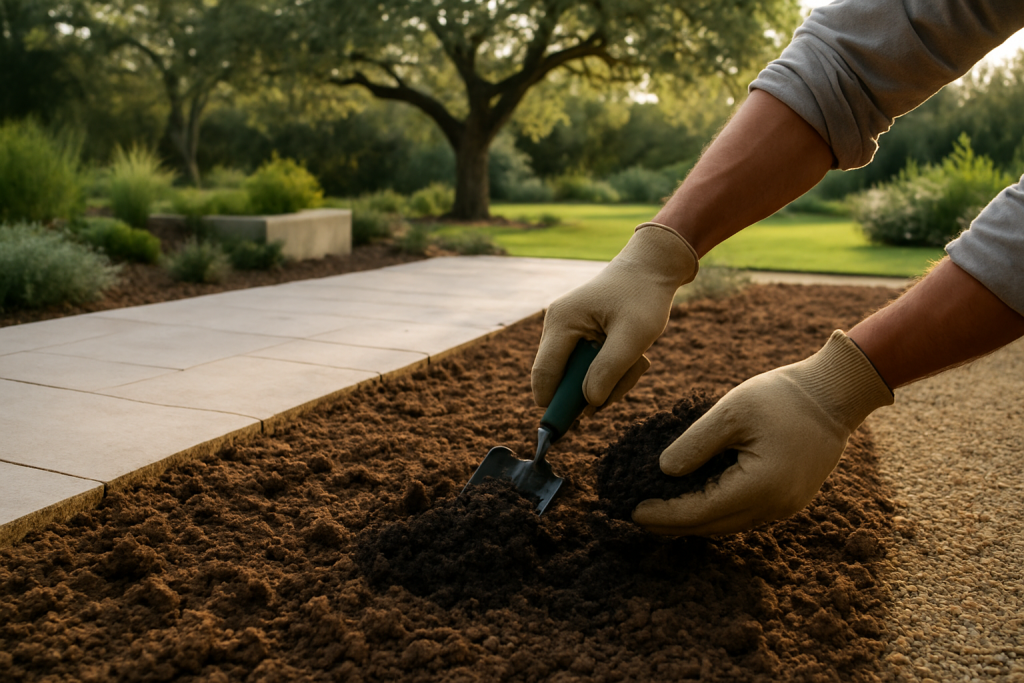
For plants, look for size, quantity, and general type. “Low-water shrubs in 3-gallon containers” is easier to compare than “native plants.” For stone, gravel, pavers, mulch, edging, or soil, the estimate should identify the material and the area it covers.
Bigger is not always better
Larger plants give a fuller look sooner, but they cost more and may need closer watering while they establish. Smaller plants can be practical for a low-water design, but the yard will take longer to fill in.
Both choices can make sense. The quote should explain the tradeoff.
Check mulch, soil, and base depth
Thin mulch, poor soil prep, or a weak base can make work look fine at first and fail faster later. In Texas sun, exposed soil dries quickly. In clay soil, poor preparation can leave roots in compacted or soggy ground.
For patios, walkways, and gravel areas, the base matters as much as the surface. Ask what base material is used, how it is compacted, and how water moves away from the house.
Watch for what a low number may leave out
A low quote often reflects a narrower scope. That may be fine for a simple cleanup. For new landscaping, turf, hardscape, or drainage work, missing preparation can change the real cost.
Soil preparation
Austin yards often need soil work before planting. Clay soil may be compacted, rocky, or uneven. If one quote includes amendment, grading, and bed shaping while another only includes plants and mulch, they are not the same project.
Ask: “What are you doing to prepare the soil before planting?”
Haul-off and disposal
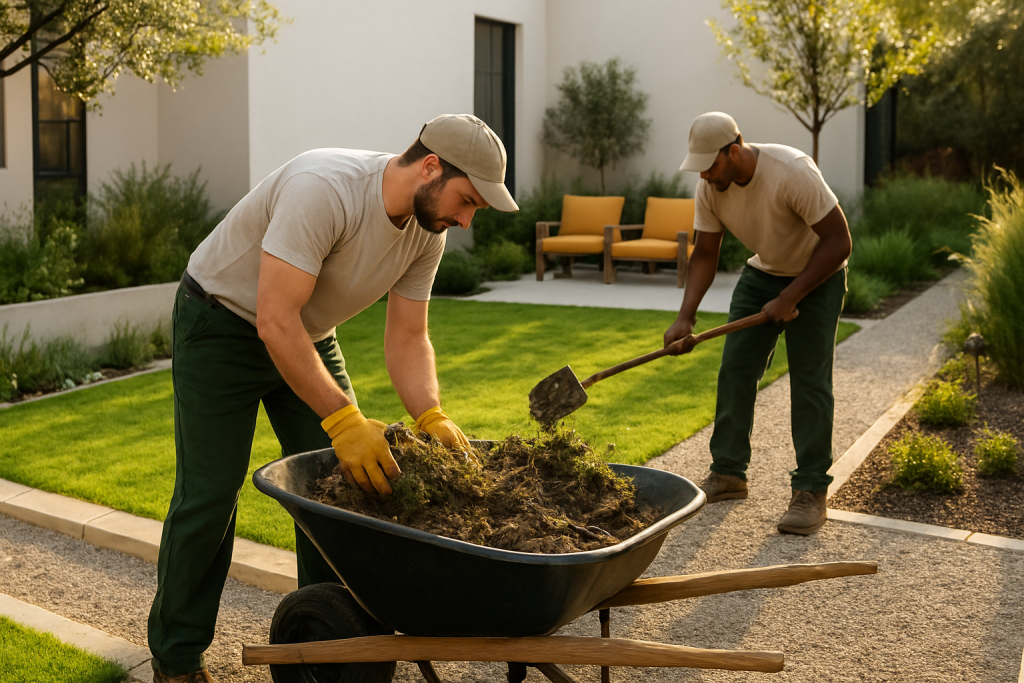
Old sod, weeds, rock, concrete, dead plants, and construction debris take labor to remove. If haul-off is not listed, ask whether debris stays on site, goes in your bins, or is removed by the crew.
Ask: “Is haul-off included, and what materials are covered?”
Irrigation repair or adjustment
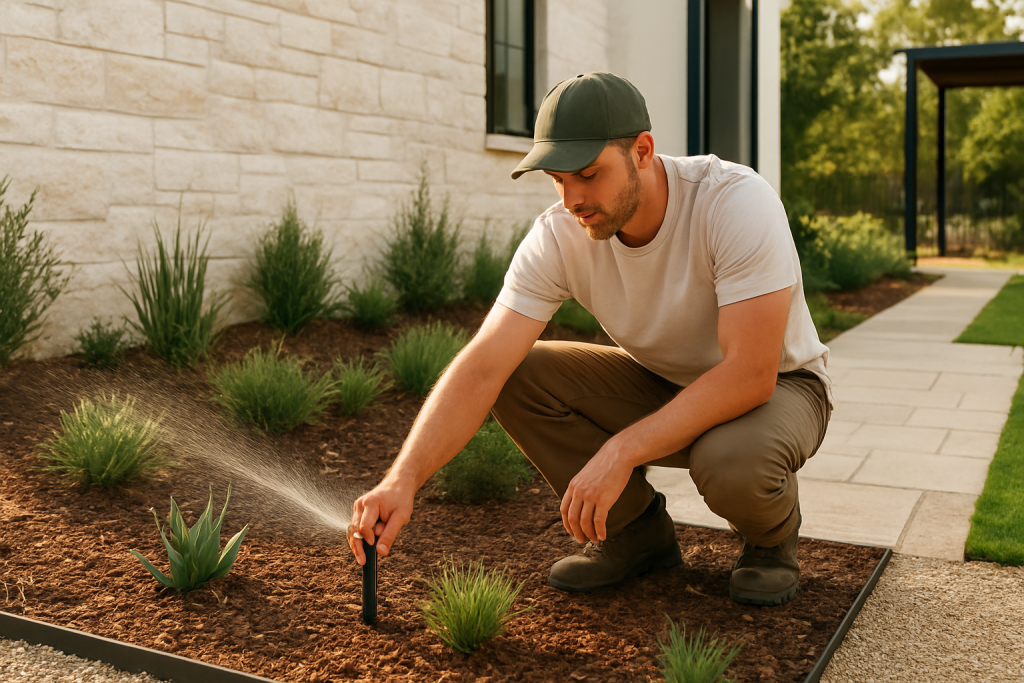
New plants or sod may need irrigation changes. Existing spray heads may be broken, buried, aimed at the wrong area, or designed for an old layout. A planting quote that ignores water coverage can leave you with maintenance problems.
Ask: “Will you test the irrigation and adjust it for the new layout?”
Ask these questions before signing
Once you understand the line items, ask questions that make the estimate specific. You do not need technical language. You need clear answers.
What happens if you hit limestone or roots?
Central Texas yards can hide shallow rock, old debris, and live oak roots. The contractor should explain what is included and what would be additional work. Major roots may require a more careful design, not just more digging.
How will drainage be handled?
Drainage should be discussed before materials go in. Water should not be directed toward the house, trapped behind edging, or pushed into a neighbor’s property. Ask where water goes during heavy rain and how the design manages it.
What maintenance should I expect?
A design can be lower maintenance, not no maintenance. Plants need establishment watering. Mulch breaks down. Gravel shifts. Pavers may need joint maintenance. Lighting may need adjustment as plants grow.
If you travel often or do not want frequent yard work, say that before the design is final.
Compare timeline, access, and communication
Price is only one part of the decision. Ask when the project can start, how long it should take, and how weather could affect the schedule. Austin heat, rain, and material availability can all matter.
Access matters too. A wide backyard gate is different from a narrow side yard with steps, slope, or finished hardscape to protect. Labor and equipment needs should show up in the estimate.
Also notice how clearly the contractor communicates. A good bid should make decisions easier. If it is vague before a deposit, it may not become clearer later.
FAQ
Should I choose the lowest landscaping quote?
Not automatically. Choose the quote that matches the scope, preparation, materials, and maintenance expectations you want. A lower number may fit a simple job, but it should still be clear.
Why do Austin landscaping quotes vary so much?
Yards vary by soil, slope, limestone, shade, drainage, access, irrigation condition, and material choices. Two similar-looking yards can require different prep.
What should be in a landscaping estimate?
Look for scope of work, materials, quantities or areas, site preparation, haul-off, irrigation notes, drainage assumptions, timeline, payment terms, and exclusions.
Need a clear landscaping estimate?
Comparing quotes is easier when the work is written clearly. We look at the yard, talk through the tradeoffs, and explain what is included before you decide.
If you are planning landscaping in Austin or nearby Central Texas communities, get your free estimate.