

Round Rock sits mostly on blackland clay, and that single fact changes how a lawn here should be watered, fed and aerated compared to advice written for anywhere else.

Watering has to account for absorption
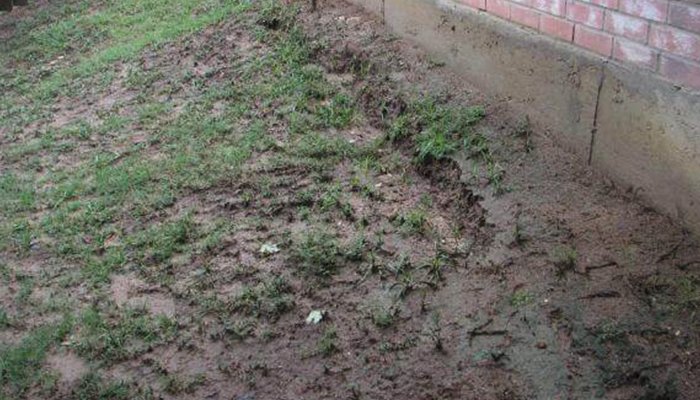
Clay absorbs slowly. Water applied faster than it can soak in runs to the street, which is why some Round Rock lawns stay dry despite long run times and high bills.
The fix is cycle and soak: split each session into shorter cycles with soak time between. Same total water, far more of it reaching roots. Most controllers can do this and almost none are set up for it. See irrigation for how to program it.
Compaction is the recurring problem
The swell-shrink cycle compacts clay season after season, and in newer subdivisions construction equipment did most of the damage before the sod arrived.
Annual core aeration matters more here than almost anywhere. Follow it with a quarter inch of compost so the material falls into the channels. Two or three seasons of that genuinely changes how the ground behaves.
Grass choice and mowing height
Bermuda handles sunny Round Rock yards well and tolerates the traffic. St. Augustine suits shaded lots but wants a high cut, 3 to 4 inches, which is where most lawns here go wrong.
Whatever the species, never remove more than a third of the blade in one cut. In July that shock is often what turns a thinning lawn into a bare one.
Drainage and the foundation
On expansive clay, the swing between saturated and bone-dry is what moves foundations. Water pooling against the slab pushes one side of that cycle to an extreme.
Extend downspouts away from the house, keep beds from trapping water against the siding, and aim for reasonably consistent perimeter moisture year-round rather than flooding and drought. See our Round Rock page for the rest of what we do locally.
The Round Rock watering schedule
Round Rock sets its own conservation stages and assigned watering days, separate from Austin. Checking your current stage before adjusting a controller is the first step, because the design has to fit the schedule you are allowed to run.
Assigned days by address mean you cannot simply water when the lawn looks thirsty. That constraint pushes toward deep, infrequent watering, which is what clay soil wants anyway, provided it is split into cycles so it can absorb.
Restrictions tighten during drought with limited notice. A landscape designed for the loosest stage struggles every time the stage moves, which is an argument for reducing turf area rather than trying to keep a thirsty lawn alive within the rules.
Newer subdivisions and construction damage
Much of Round Rock is relatively recent construction, and the standard sequence is brutal for soil: topsoil scraped, heavy equipment across the lot, then sod laid on whatever remains.
The result is a lawn sitting on compacted subsoil with very little organic matter. It looks acceptable for a year or two while the sod lives off its own root mass, then declines as roots fail to penetrate.
The fix is unglamorous and works: annual core aeration with compost top-dressing, repeated. Three seasons of that changes how the ground accepts water, which is the underlying problem behind most of the symptoms people treat separately.
Shade, trees and what to expect
Established Round Rock neighbourhoods have mature trees and the shade problem that comes with them. St. Augustine handles moderate shade; nothing handles deep shade under a large live oak.
Where turf keeps failing under a canopy, the answer is to stop trying. Shade-tolerant ground cover, a mulched bed or a seating area all work better and stop you watering ground that will never grow grass.
If you have oaks, remember the oak wilt window, February through June, and paint every cut regardless of month. Georgetown and Round Rock both sit in areas where oak wilt is well established, and pruning timing is the main thing a homeowner controls.
Common questions we get about this
Three come up almost every time.
Can I do this myself? Usually part of it. The diagnostic work and the finishing details are where experience shows, and the preparation underneath is where shortcuts cost the most. Most homeowners who do it themselves succeed on the visible work and struggle with base preparation, drainage and timing.
When is the best time? In Central Texas, almost always autumn. Soil is still warm, air has cooled, and anything planted or installed has months to settle before summer stress arrives. Spring works but races the heat.
What does it cost? Any number quoted without seeing the property is a guess, because our two soils, the slope and the access change the work substantially within a few miles. What we can say is that the invisible preparation is where the real cost sits, and where the cheapest bid has usually economized.
Round Rock lawn struggling?
On clay, watering technique matters more than water quantity.