
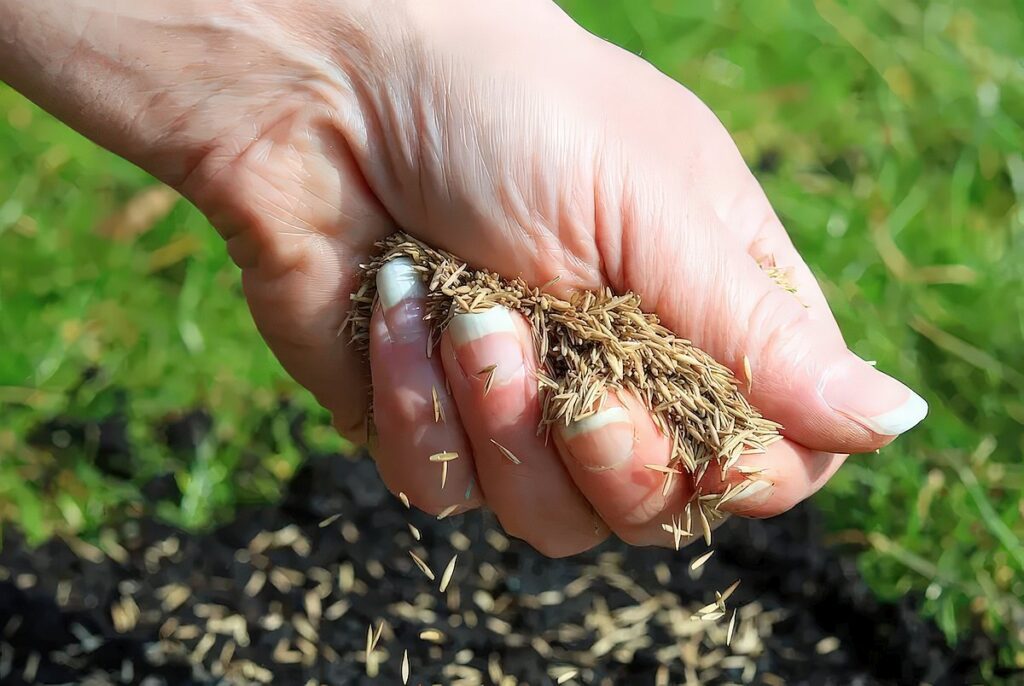
Warm-season lawns here go brown from roughly December to March. Overseeding with annual ryegrass covers that with green, and it is genuinely popular. It also has a cost most people are not told about.
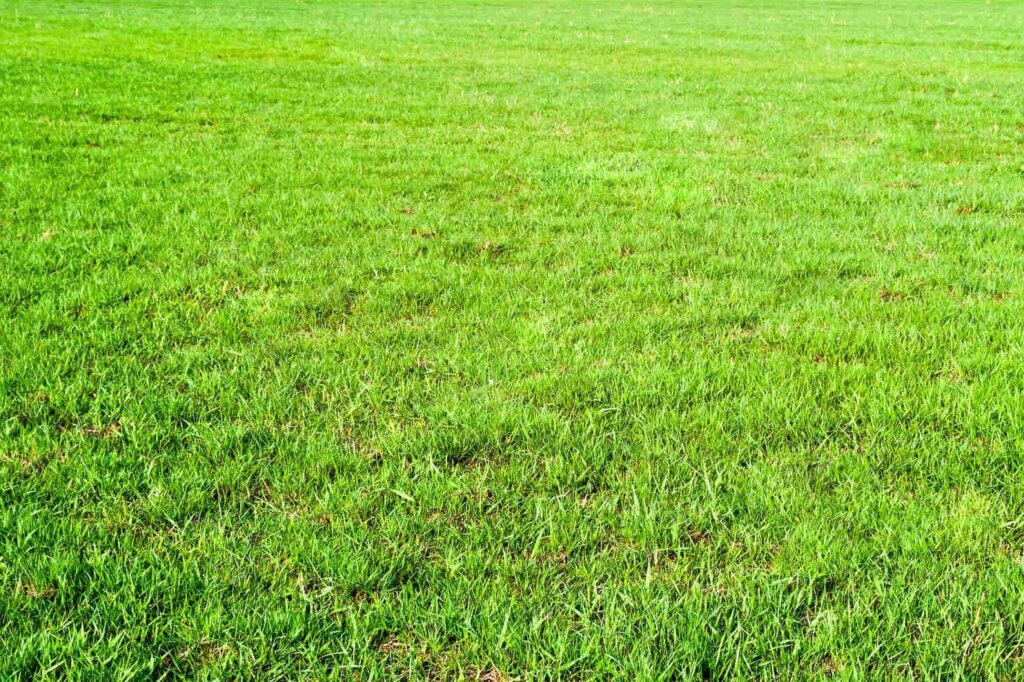

How it works and when to sow
Annual ryegrass germinates fast in cool soil, grows through winter and dies off as heat arrives. Sow when nights have cooled consistently, typically October into early November here. Too early and summer heat kills it; too late and it never establishes before the cold.
Rather hand it off? See our lawn care services in Austin, TX: mowing, feeding and weed control on a schedule that fits Austin's watering rules.
Mow the existing lawn short before sowing so seed reaches soil, water lightly and frequently until germination, then taper. It needs mowing through winter, which surprises people expecting a maintenance-free green carpet.
The cost nobody mentions
Ryegrass competes with your dormant warm-season grass for water, nutrients and light exactly when that grass is trying to green up in spring. A heavy stand of ryegrass delays St. Augustine and Bermuda green-up and can weaken it.
If your permanent lawn is already thin or struggling, overseeding usually makes it worse. If the lawn is dense and healthy, it tolerates the competition much better.
Who should do it and who should not
Worth it if appearance through winter matters to you, if you are selling the house in spring, or if the lawn is dense enough to handle the competition.
Skip it if the lawn is thin, if you are trying to establish or repair turf, or if you would rather not mow in January. Buffalo grass owners in particular should skip it, since dormancy is part of how that grass works.
A middle path: overseed only the visible front yard and let the back go dormant. See lawn care for how the rest of the winter schedule fits.
The spring transition
As temperatures climb, ryegrass declines and can look ragged for a few weeks while the permanent lawn takes over. Mowing lower during that transition helps the warm-season grass get light and speeds the handover.
Do not fertilize during the transition hoping to help. Feeding at that moment mostly benefits the ryegrass you are trying to phase out.
Seeding rate and preparation
Rates vary with how solid a stand you want, and the common error is sowing far too heavily on the theory that more seed equals more green. Excess ryegrass produces a thick mat that competes harder with your permanent lawn in spring and needs mowing more often all winter.
Preparation matters more than quantity. Mow the existing lawn short and remove clippings so seed reaches soil rather than sitting on thatch. Scalping too aggressively stresses the permanent grass going into winter, so lower the deck by stages over two mowings rather than all at once.
Water lightly and frequently until germination, which takes only days in warm soil, then taper toward normal watering. Ryegrass germinating on the surface dies quickly if it dries out even once.
Annual versus perennial ryegrass
Annual ryegrass is what most people use for winter overseeding: cheap, fast to germinate, coarse in texture, and it dies reliably when heat arrives. That reliable death is the point, because it clears the way for your permanent lawn.
Perennial ryegrass is finer, darker and better-looking, and it costs more. The problem in Central Texas is that it does not always die on schedule, and a stand persisting into summer competes with warm-season grass exactly when that grass needs to fill in.
For most Austin-area lawns annual is the right choice. Perennial makes sense mainly in shaded areas where the permanent lawn is weak anyway and where summer heat is moderated.
Common questions we get about this
Three come up almost every time.
Can I do this myself? Usually part of it. The diagnostic work and the finishing details are where experience shows, and the preparation underneath is where shortcuts cost the most. Most homeowners who do it themselves succeed on the visible work and struggle with base preparation, drainage and timing.
When is the best time? In Central Texas, almost always autumn. Soil is still warm, air has cooled, and anything planted or installed has months to settle before summer stress arrives. Spring works but races the heat.
What does it cost? Any number quoted without seeing the property is a guess, because our two soils, the slope and the access change the work substantially within a few miles. What we can say is that the invisible preparation is where the real cost sits, and where the cheapest bid has usually economized.
Want winter color without hurting the lawn?
We will tell you honestly whether your lawn is dense enough to take it.