

One choice buys you time, the other buys you money. Neither fixes clay, a slope, or deep shade.
If you are weighing sod vs seed lawn in Texas, the honest answer is that neither is better. The question is which one your yard will let you keep alive through its first summer. Austin-area soil is heavy clay, July sun is not negotiable, and your utility’s watering rules can decide the outcome before the grass does.
Rather hand it off? See our Austin lawn care: mowing, feeding and weed control on a schedule that fits Austin's watering rules.
Both fail the same way. Grass on compacted clay with no prep stalls, whatever you paid for it. Grass that dries out in its first two weeks dies, and you usually find out too late. Seed fails visibly and cheaply; sod fails expensively — a dead sod lawn is a bill you already paid.
Establishment time: what you live with
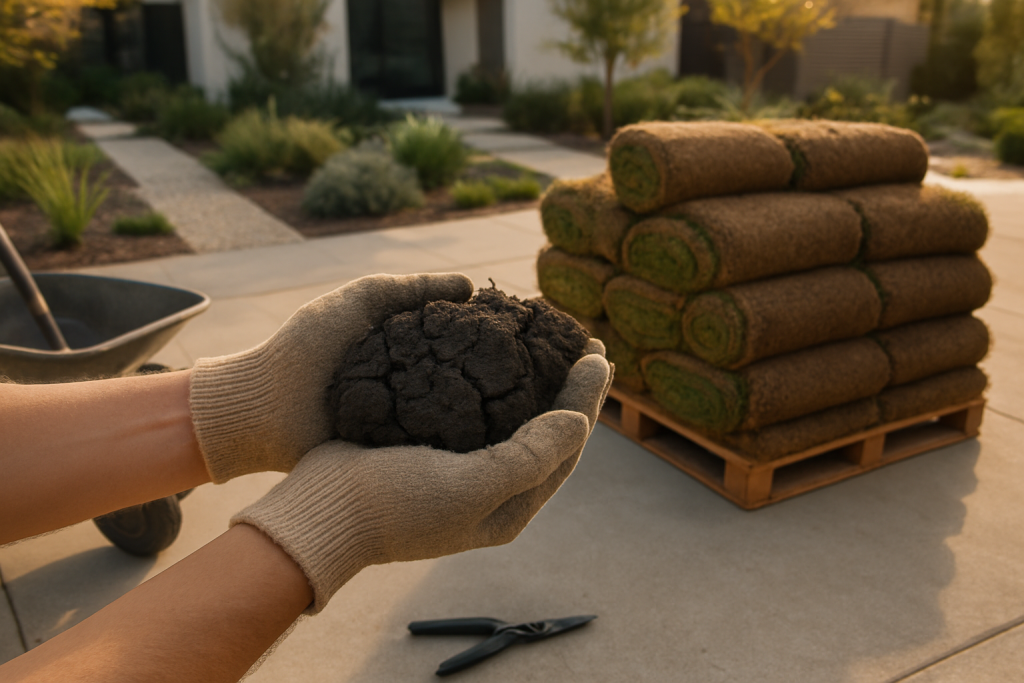
Sod arrives as living grass. You are not waiting for germination, you are waiting for roots. Expect seams to close in a few weeks if you water correctly, and stay off it until it has knitted. Two things go wrong constantly: the pallet sits in the sun for two days before it goes down, and sod laid over unbroken clay roots in the top inch and stalls in the first hot week.
Seed is slower and less predictable. Bermuda, centipede and zoysia can all be seeded; germination runs from roughly a week to three depending on species and soil warmth, and bare dirt looks worse before it looks better. Weeds usually arrive first. A seeded lawn fills in over a season, not a month.
Water: the part that decides August
Fresh sod has roots in the top inch, so it wants short, frequent cycles — two or three times a day in June, less in October. Miss a day in July on new sod over black clay and you will see it: edges curl, seams open, some does not come back.
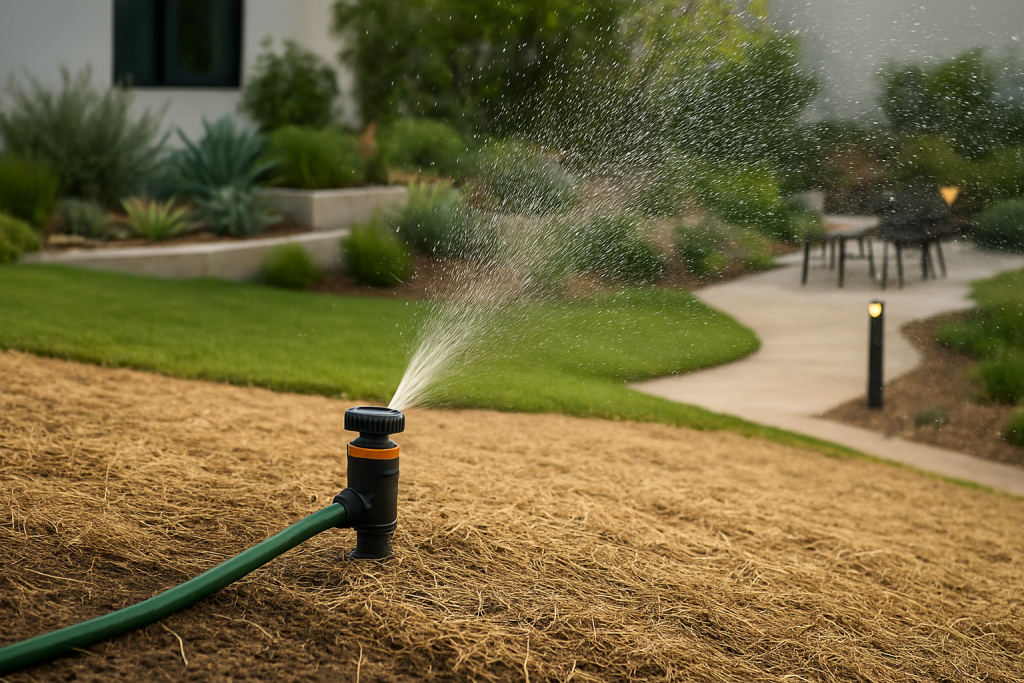
Seed is stricter: the surface has to stay damp and never dry out, which on bare sunny dirt means light watering several times a day. One missed afternoon kills germinating seed, and nothing shows until you are two weeks in with bare ground.
Once established, both want roughly an inch a week in summer, less in spring and fall. Plainly: if you cannot water twice a day for two weeks, seed is wrong in summer, and sod in July is worse.
Slope and shade: where each one fails
On a slope
Seed on any real grade is one hard rain from gone. Water sheets, seed floats, and it ends in the gutter. Seed a slope anyway and you need an erosion blanket and a way to keep it damp — after you fix the grade.
Sod holds a grade the day it is laid. That does not make it right everywhere: check the slope still drains away from the foundation instead of leaving a wet band against the house.
In shade
Bermuda needs sun; in shade it thins, then dies. St. Augustine takes more shade than any other warm-season grass we plant here, and it comes as sod or plugs, not practical seed. Zoysia sits in the middle. Under dense live oak canopy neither works: seed in deep shade is money in the dirt, sod in deep shade is more money in the dirt. Change the canopy or plant groundcover.
Timing: the two windows that work here
Late spring into early summer is the strongest window for both, because warm-season grass wants warm soil. Sod can go outside that window and still work; seed mostly cannot, because it needs warm soil and steady moisture at once.
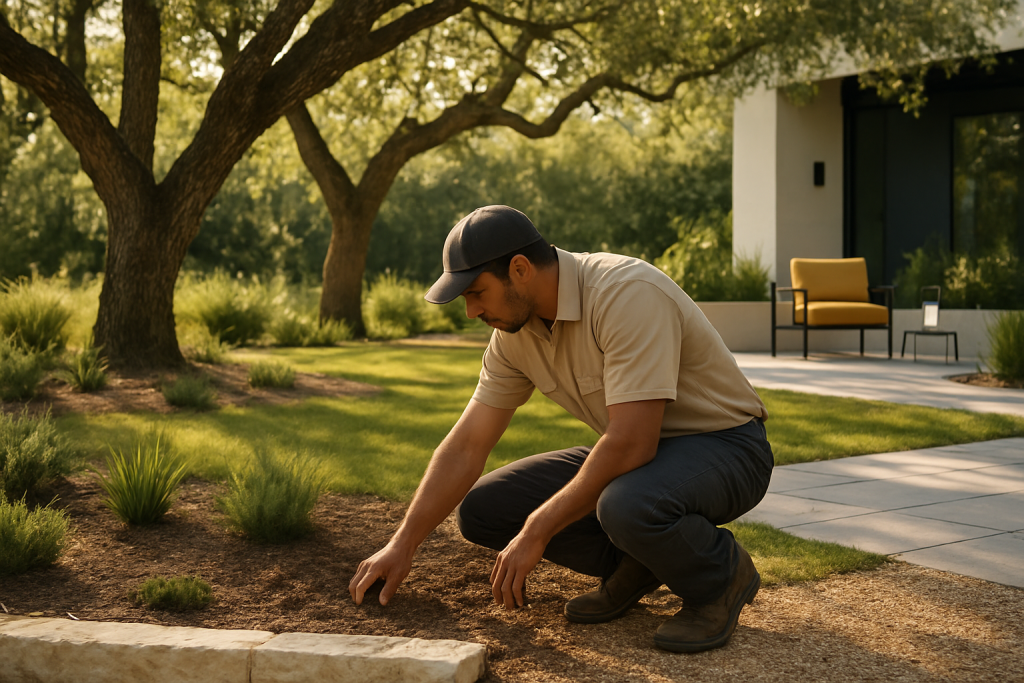
Early fall is the second window: soil still warm, air cooler, water demand lower. Good for sod, workable for seed if you keep the surface damp. Seed put down late in fall sits or comes up weak, and sod laid in winter sits dormant with no root growth.
Before you plant, check the watering rules your utility or MUD currently enforces. New-sod allowances vary and change, and a plan built on watering three times a day your utility will not allow is a plan to lose the lawn.
Cost: how the two bills differ
Sod is priced per pallet and per square foot, and the bill includes delivery and labor. You are paying for grass that is already alive and for hands to get it down fast.
Seed costs little per square foot in material. You pay instead for prep, topdressing, an erosion blanket on any slope, weeks of watering, and often a second seeding to fill the gaps — plus the weeds that come with bare ground.
Our rule: on a flat, sunny, small area where you can water on schedule, seed is the cheapest route that can work. On a slope, in shade, on a deadline, or on a yard that has to be usable this season, sod is usually cheaper than the second attempt.
Any number quoted without seeing the property is a guess: square footage, gate access, prep and shade move the total more than the grass choice does. We check grade, soil and shade before quoting — see our landscaping work.
Which one to pick
- Flat, sunny, small, and someone is home to water twice a day: seed.
- Slope, shade, a deadline, or nobody home during the day: sod.
- Deep shade either way: neither. Change the canopy or plant groundcover.
- Bare compacted clay with no prep planned: neither. Fix the soil first.
FAQ
Can I do this myself?
Sod, yes, if you can get the pallet down within a day and water on schedule. Seed, yes, if the ground is prepped and level. Both fail on timing, not skill.
When is the best time to sod or seed in Central Texas?
Late spring into early summer for either. Early fall is the second window and easier on water. Winter is for planning, not planting.
What does it cost?
Sod costs more up front, per square foot, with material, delivery and labor. Seed costs less in material and more in water, prep and re-seeding. We quote after seeing the grade and shade.
Lawn going in and not sure which way to go? Send us the square footage, the slope and how much shade it gets — we will tell you which one will fail and which will hold. Get your free estimate.