
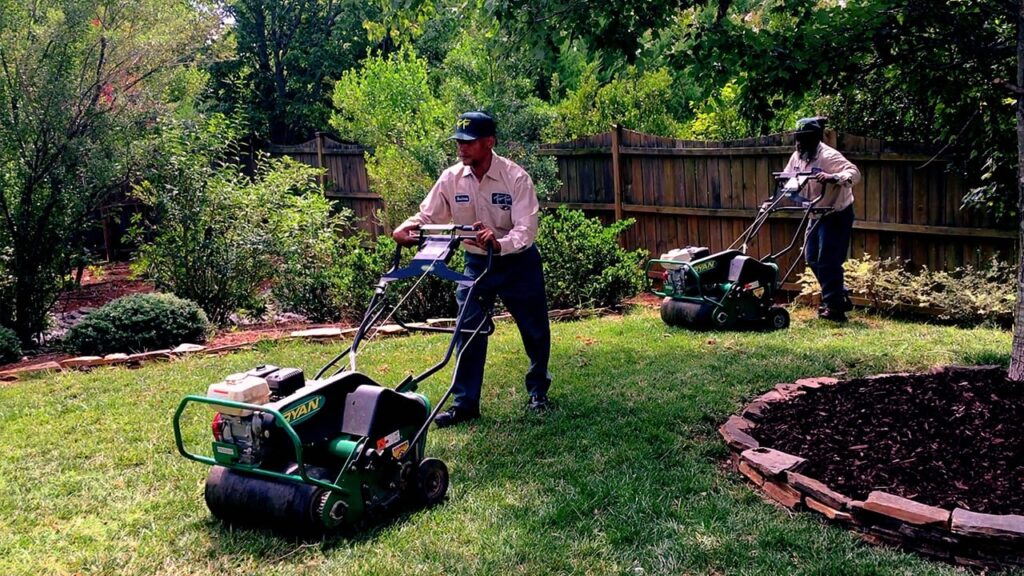
Aeration advice online is mostly written for northern lawns, and it says fall. Central Texas lawns are warm-season grasses, and for them that advice is backwards.
The rule under the calendar
Aerate while the grass is actively growing, so it can heal and fill the holes. Aerate dormant grass and you have opened the lawn to weeds with nothing to close it.
For Bermuda, St. Augustine, Zoysia and Buffalo, active growth runs from late spring through early fall. Late spring to early summer is the ideal window here. Early fall still works while the lawn is growing, but each week later means less recovery time before dormancy.
Fall is correct for cool-season grass, which around Austin mostly means ryegrass used for winter overseeding.
Soil moisture beats the calendar
The condition that matters more than the month is how wet the ground is. On dry blackland clay the tines will not penetrate. On saturated clay the plugs smear closed and you have accomplished nothing.
Slightly moist is the target. Watering a day or two beforehand is often the difference between a real aeration and an expensive pass across the lawn.
Core, not spike
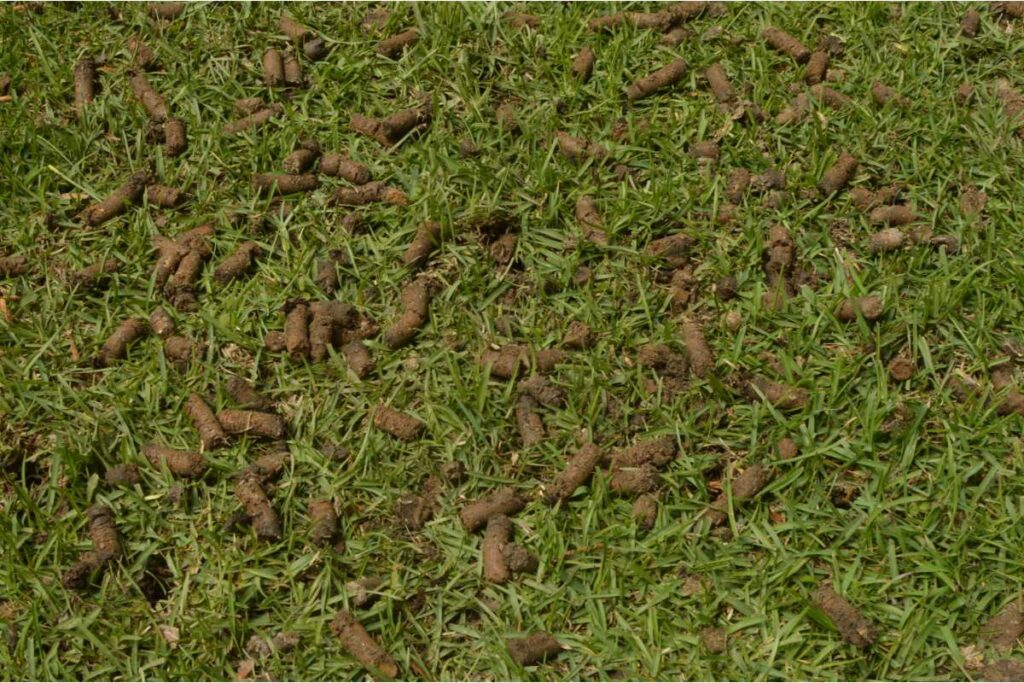
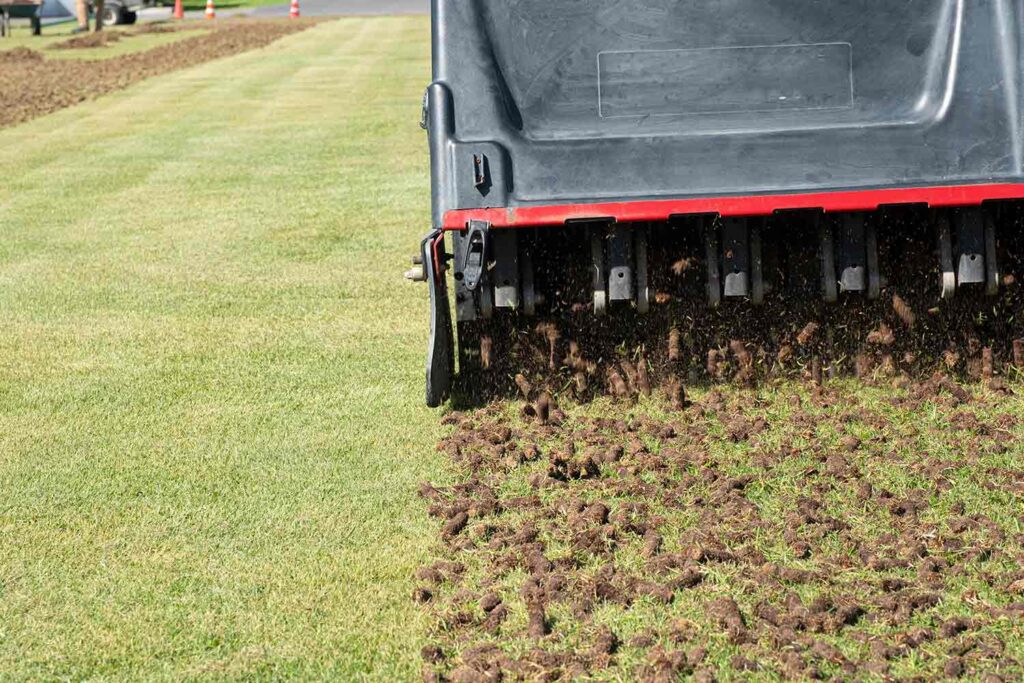
Core aeration removes plugs and leaves open channels. Spike aeration pushes soil sideways, which on clay presses the walls of each hole tighter and makes compaction worse. If someone quotes aeration, ask whether the machine pulls cores.
Afterward, leave the plugs where they fall and top-dress with about a quarter inch of compost. That combination is what turns aeration from a one-season improvement into permanent soil change.
What aeration does not fix
Aeration relieves compaction. It does not correct a drainage failure, a coverage gap in the irrigation, or the wrong grass in the wrong light. If a lawn is failing for one of those reasons, aerating produces a brief improvement and then the same decline.
It also will not rescue a lawn cut at the wrong height. Compaction and scalping produce similar-looking thinning, and treating one while continuing the other wastes the work.
The honest sequence is to check mowing height first, then coverage, then compaction. Aeration is powerful when compaction is genuinely the limiting factor, and neutral when it is not.
Overseeding, top-dressing and what pairs well
Aeration is the right moment to top-dress with compost, because the material falls into the channels instead of sitting on top. About a quarter inch worked across the surface is the working figure.
Overseeding is a different question here. Warm-season grasses are mostly established from sod or plugs rather than seed, so the northern habit of aerating and overseeding does not translate directly. Bermuda is the exception and can be seeded into after aeration during active growth.
If you are also fertilizing, doing it right after aeration is when it counts most, because the nutrients reach the root zone directly rather than sitting on compacted soil waiting to run off in the next storm.
Not sure when your lawn should be aerated?
Tell us your grass type and we will tell you the right window.