

People treat watering restrictions as a temporary inconvenience to endure. In Austin they are permanent, and a landscape designed as though they were not is a landscape that struggles most of the year.

What the rules actually are
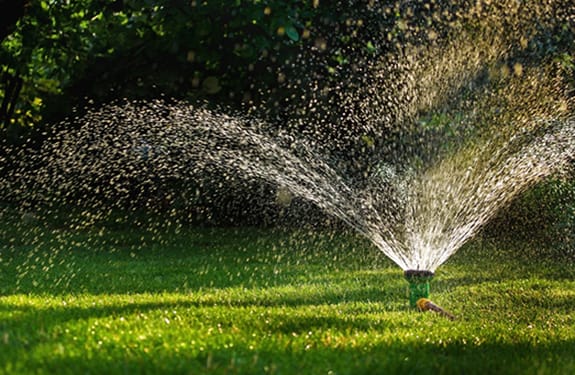
Austin operates year-round conservation stages. Automatic irrigation and hose-end sprinklers are limited to assigned days based on address, and watering during the middle of the day is prohibited because most of it evaporates before reaching a root.
Cedar Park, Round Rock, Leander, Georgetown and Pflugerville each set their own schedules and stages. Check yours before planning irrigation changes, because the rules drive the design more than personal preference does.
Design for the schedule you are allowed
If a planting plan needs water four days a week and you are allowed one, the plan loses. That is the whole calculation. It pushes design toward drought-tolerant and native species, drip in beds rather than spray, and grouping plants by water need so one zone is not serving two appetites.
Grouping is the step most often skipped. Turf, beds and slopes on the same zone guarantee that something is always drowning or dying, and no schedule fixes it.
The money the city leaves on the table for you
Austin Water runs rebates for converting irrigated turf to water-conserving landscaping, plus incentives for rainwater collection and irrigation upgrades. Most require pre-approval before work begins, so tearing out the lawn first can disqualify the project.
Amounts and eligibility change yearly, so verify current terms with Austin Water rather than trusting a figure you read somewhere. Our low-water plant guide covers species, and irrigation service covers converting the system.
Reading your own restriction stage
Utilities publish a current conservation stage and a schedule of assigned days by address. Those two facts should be on the wall before any irrigation change is designed. Stages tighten during drought and relax afterward, and the design should survive the tight version rather than assume the loose one.
If you are outside Austin proper, do not assume Austin rules apply. Cedar Park, Round Rock, Leander, Georgetown, Hutto and Pflugerville each set their own, and they do not always match.
Hand-watering and drip are often treated differently from automatic spray irrigation, which is one reason converting beds to drip buys real flexibility beyond the water savings.
Designing so restrictions stop mattering
The goal worth aiming at is a landscape that looks intentional even in the tightest stage. That means the majority of the planting survives on rainfall once established, with irrigation as insurance rather than life support.
Practically: group plants by water need so one zone is not serving two appetites, shrink turf to the areas people actually use, convert beds to drip, and mulch heavily to slow evaporation. Choose natives and adapted species that evolved with this rainfall pattern.
A landscape built this way does not panic when a stage tightens. That is the real payoff, more than any single month of savings on the bill.
Designing a yard around the rules?
We start with your restriction stage, then choose plants.