
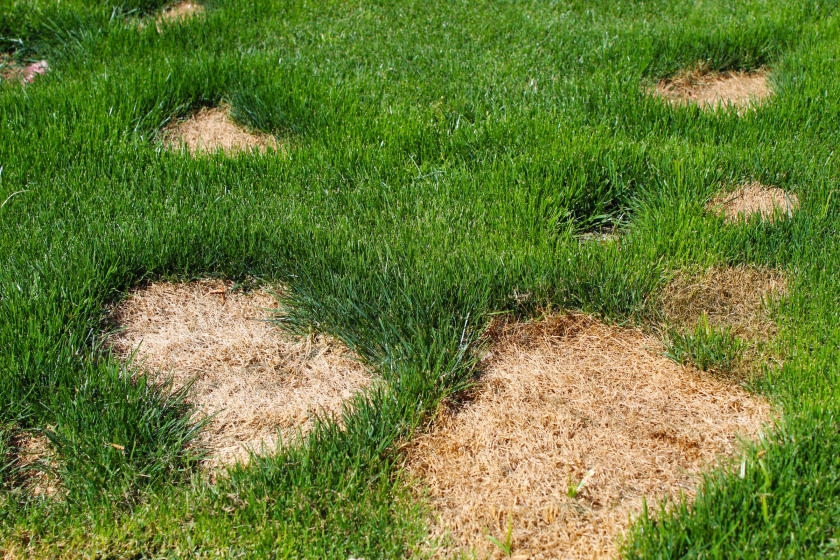
Brown patches in a St. Augustine lawn in July have two common causes that look nearly identical and call for opposite responses. Watering chinch bug damage makes it worse.
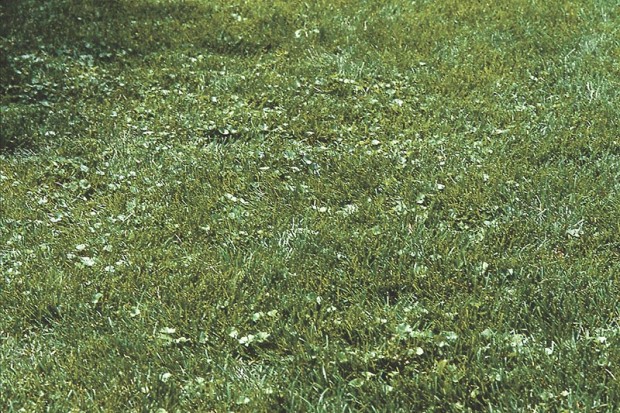

The water test
Water the brown area thoroughly for about a week, keeping everything else the same. Drought stress recovers, at least partly. Chinch bug damage does not, and usually keeps spreading.
Rather hand it off? See our lawn care services in Austin, TX: mowing, feeding and weed control on a schedule that fits Austin's watering rules.
That single test resolves most cases and costs nothing but patience. What it prevents is the common cycle of adding more and more water to a problem water cannot fix, which then adds fungal issues on top.
Where and when to look
Chinch bugs favor hot, sunny, dry areas: along driveways and sidewalks, south-facing slopes, and spots where reflected heat concentrates. They appear in mid to late summer and spread outward in irregular patches rather than uniformly.
To confirm, part the grass at the edge between green and brown, not in the dead center. Look at the soil surface for small dark insects moving when disturbed. The dead middle has nothing left for them, so they have already moved to the margin.
What each one needs
Drought stress needs deeper watering, correct mowing height and often core aeration, because compacted soil means water never reaches roots regardless of how much you apply.
Chinch bugs need targeted treatment, and prevention through a lawn that is not already stressed. Healthy, correctly mown St. Augustine at proper height resists them far better than a scalped lawn. Grubs are the third possibility if grass lifts like carpet, which is a root problem rather than a blade problem.
Grubs, the third possibility
If grass lifts like carpet when you tug it, the roots have been eaten and you are looking at grubs rather than either of the other two. Chinch bugs damage blades and crowns; grubs sever roots from below.
Confirm by cutting a small square of turf and folding it back. A handful of white C-shaped larvae in a square foot is a treatable population; one or two is normal and not worth spraying for. Damage typically shows in late summer and early fall.
The secondary sign is animals digging up the lawn at night. Raccoons and birds are after the grubs, and their damage is often what the homeowner notices first.
Prevention beats treatment for all three
Every one of these problems hits stressed lawns hardest. A St. Augustine lawn cut at proper height, watered deeply and rarely, and growing in soil that is not compacted resists chinch bugs far better than a scalped, shallow-watered one, even with the same insect pressure in the neighborhood.
Practically that means: raise the mowing deck, water less often but longer, aerate compacted soil, and stop over-fertilizing, since excess nitrogen produces soft growth that pests prefer.
Treat when you have confirmed the pest, not when you see brown. Broad-spectrum insecticide applied to drought stress accomplishes nothing except killing beneficial insects and costing money.
Brown patches that will not recover?
We identify before treating, because the wrong treatment costs you the lawn.