
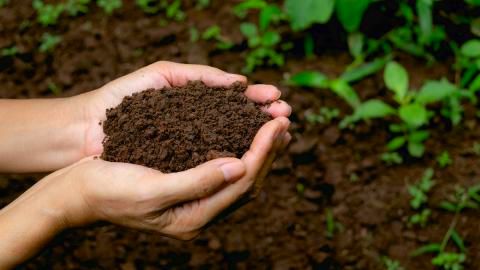
East of Austin the soil changes completely. Hutto, Pflugerville and Manor sit on deep blackland clay, and almost every landscaping decision out here follows from that one fact.
What the soil does
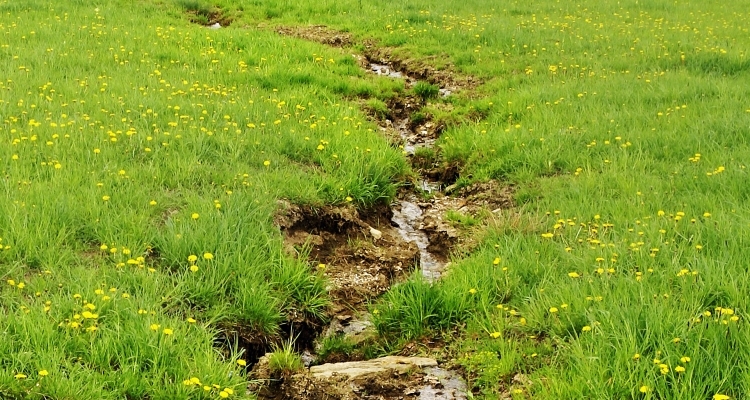
Blackland clay holds water well and releases it slowly. In wet months that means saturation; in dry months it shrinks and cracks, sometimes wide enough to put a hand into. That swell and shrink cycle compacts the soil further each season and is the reason foundation movement is a common conversation in these neighborhoods.
Planning something like this for your own yard? Our team does landscape design and installation in Austin, from the first sketch to the last plant.
Newer subdivisions usually start worse than the surrounding land, because construction scrapes topsoil and heavy equipment compacts what remains before the sod arrives.
Plants that tolerate wet feet and drought
The trap is choosing plants for drought tolerance alone. Out here they also have to survive weeks of saturated soil in winter, and many classic drought species rot in exactly those conditions.
Species that handle both extremes do better than specialists at either: cedar elm, Texas sage in raised positions, muhly grasses, rock rose, and switchgrass in the wetter areas. Raised beds solve much of it by lifting roots above the worst saturation.
Drainage and soil building
Grading comes first, because no drain compensates for water running toward the house. Downspout extensions are the cheapest meaningful fix and the most commonly skipped. French drains and dry wells handle volume where there is no outlet.
Long term, core aeration with compost top-dressing is the only thing that genuinely improves this soil. Two or three seasons of it changes how the ground absorbs water in a way no single treatment does. See drainage solutions if water already sits after rain.
Building beds that survive the swing
Raised beds are the single most effective technique on this soil, because lifting the root zone a few inches above grade removes plants from the worst winter saturation while still giving them the clay’s moisture-holding capacity below.
Fill with a blend rather than pure compost or pure topsoil, and expect to top up as it settles. Edge the beds properly so the material stays where you put it, since clay yards shed water across the surface during heavy rain.
Where beds meet the lawn, a defined edge also stops the clay from heaving turf into the beds over successive wet-dry cycles.
Trees and foundations on expansive clay
Large trees close to a house draw moisture from the soil and deepen the shrink side of the cycle, which is why foundation conversations in Hutto and Pflugerville often involve a tree. That does not mean removing every tree near a house, but it does mean siting new ones thoughtfully and keeping perimeter moisture as even as possible year-round.
Consistent watering around the foundation during long droughts is genuinely protective on this soil. So is preventing water from pooling against the slab in wet months. Both sides of the swing cause damage, and the goal is to flatten the curve rather than eliminate moisture.
If doors stick seasonally or cracks open and close with the weather, that is soil movement, and drainage plus consistent perimeter moisture is the landscaping half of the answer.
Clay soil problems in Hutto or Pflugerville?
We start with how your lot drains, not with a plant list.