
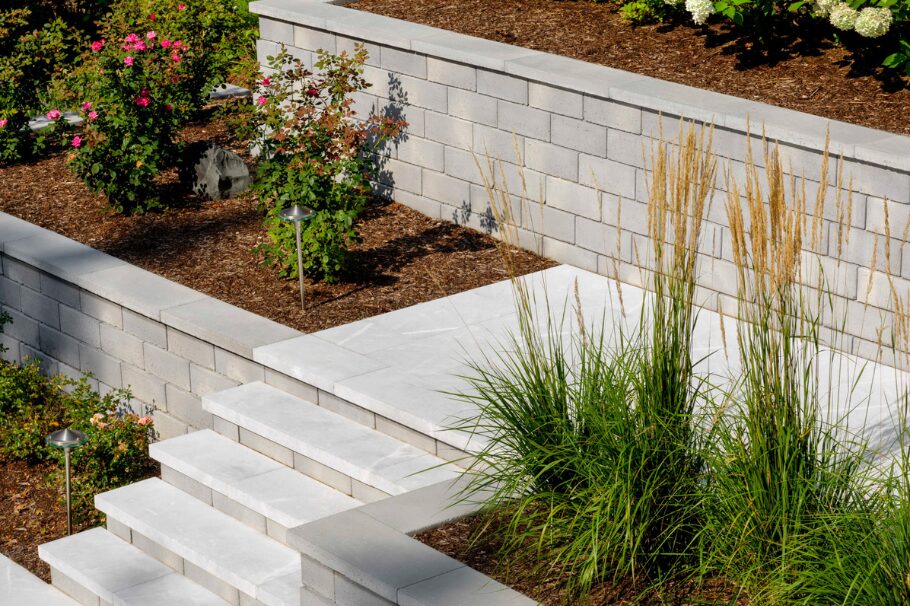
Slopes in Lago Vista, Bee Cave and West Austin combine two hard problems: very little soil over rock, and gravity moving what soil there is downhill every time it rains.

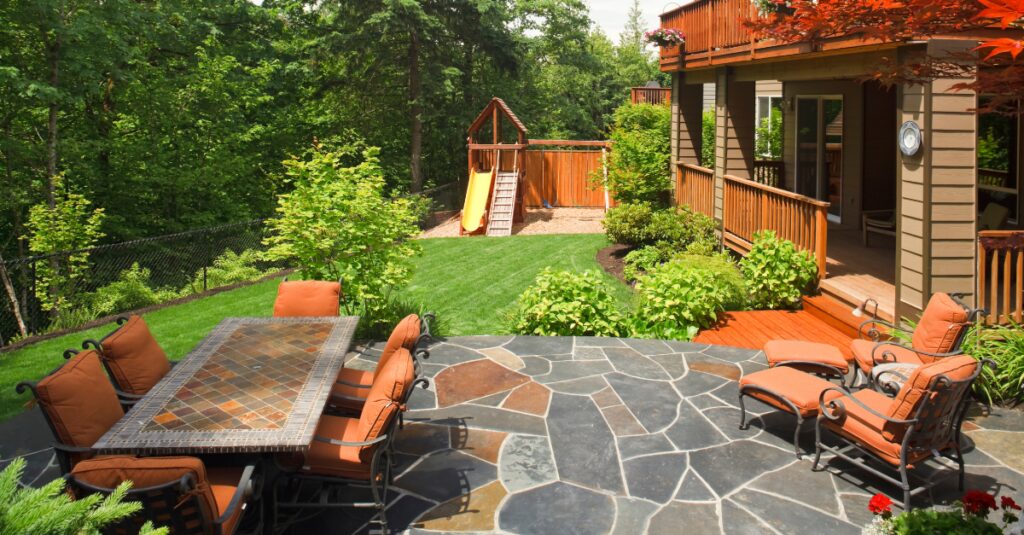
Stop the erosion before you plant
Planting into an actively eroding slope wastes plants. Water has to be slowed first, whether with terracing, check structures across the flow, or heavy mulch held in place.
Planning something like this for your own yard? Our team does landscape design and installation in Austin, from the first sketch to the last plant.
Retaining walls are the permanent answer on steeper grades, but height and drainage behind the wall matter more than material. A wall without proper drainage becomes a dam, and hydrostatic pressure is what pushes walls over.
Plants that hold ground
Deep-rooted natives do the structural work: muhly grasses, sumac, agarita, cedar sage in the shade. Avoid anything shallow-rooted and thirsty, which describes most turf and rules out lawn on a real slope.
Terraced planting pockets work better than trying to plant a continuous face. Each pocket holds soil and water long enough for roots to establish, and once established these plants stabilize far more than they demand.
Water rules and access
Lakeside communities around the Highland Lakes often run their own conservation rules, sometimes stricter than Austin. Design for the schedule you are actually allowed to run rather than what you would prefer.
Practical constraint people forget: slope work is harder to access and therefore costs more. Machinery may not reach, materials may need carrying, and that shows up in the quote. Getting it right once is cheaper than rebuilding after the next heavy rain. See hardscaping for walls and drainage for what goes behind them.
Retaining walls: heights, permits and drainage
Wall height is where projects get expensive and where corners get cut. Above certain heights, walls typically require engineering and permitting, and the threshold varies by jurisdiction. Two shorter terraced walls often solve the same grade change more safely and more cheaply than one tall wall.
What actually fails walls is water, not weight. Hydrostatic pressure behind a wall with no drainage will push it over regardless of how solid the face looks. Proper construction means gravel backfill, filter fabric and a drain line with somewhere to go. That work is invisible when finished, which is exactly why it is the first thing skipped in a cheap bid.
Mulch, watering and access on a slope
Standard bark mulch floats away in the first heavy rain on any real grade. Use heavier material: shredded hardwood knits together, or use rock where flow concentrates. Jute netting holds material in place while plants establish and then breaks down.
Irrigation on slopes needs cycle and soak more than flat ground does, because runoff starts almost immediately. Drip is usually better than spray, applying water at the root where it cannot run off the surface.
Finally, be realistic about access. If machinery cannot reach the work area, materials get carried by hand and the labor line on your quote reflects that. It is not padding, it is the actual cost of building on a hillside.
Losing soil down a slope?
Erosion gets worse and more expensive every season it is ignored.