

If you are searching for hoa landscaping approval austin, you are probably planning a front-yard change and trying to avoid a slow back-and-forth with your neighborhood architectural committee.
In the Austin area, HOA review is usually not about whether a yard looks attractive. It is about whether the change follows the community rules, manages drainage, and will hold up under Texas sun, clay soil, shade, limestone, and drought conditions.
Planning something like this for your own yard? Our team does landscape design and installation in Austin, from the first sketch to the last plant.
A smoother approval starts with a clear submittal. You need to show what will change, where it will go, what materials you will use, and how the yard will be maintained after installation.
What an Austin-area HOA usually wants to see
Most HOAs want enough detail to understand the front-yard impact from the street. A note that says “new landscaping” is rarely enough.
A simple plan view
You do not always need a formal landscape architecture drawing, but you should provide a clean sketch or plan showing the house, driveway, sidewalk, property line, existing trees, proposed beds, turf areas, hardscape, and lighting locations.
If the yard has a slope, drainage swale, retaining edge, or low spot near the sidewalk, include it. Drainage is one of the first things reviewers question, especially in Central Texas storms.
Material and plant details
List plant names, mature size, mulch or gravel type, edging material, paver or stone selection, turf product if used, and lighting fixture style. HOAs tend to reject unclear applications more than reasonable designs.
For Austin yards, it helps when the plant list fits the site: sun plants in full sun, shade-tolerant plants under live oaks, and low-water choices where irrigation will be limited.
Photos and color references
Use current photos of your yard and sample images of proposed materials. Avoid inspiration photos that look nothing like your lot. A limestone border, decomposed granite path, or native planting bed should feel like it belongs on your actual property.
How long approval usually takes
Approval timing depends on the HOA’s process. Some communities allow the management company to approve routine plant replacements. Others wait for an architectural review committee meeting.
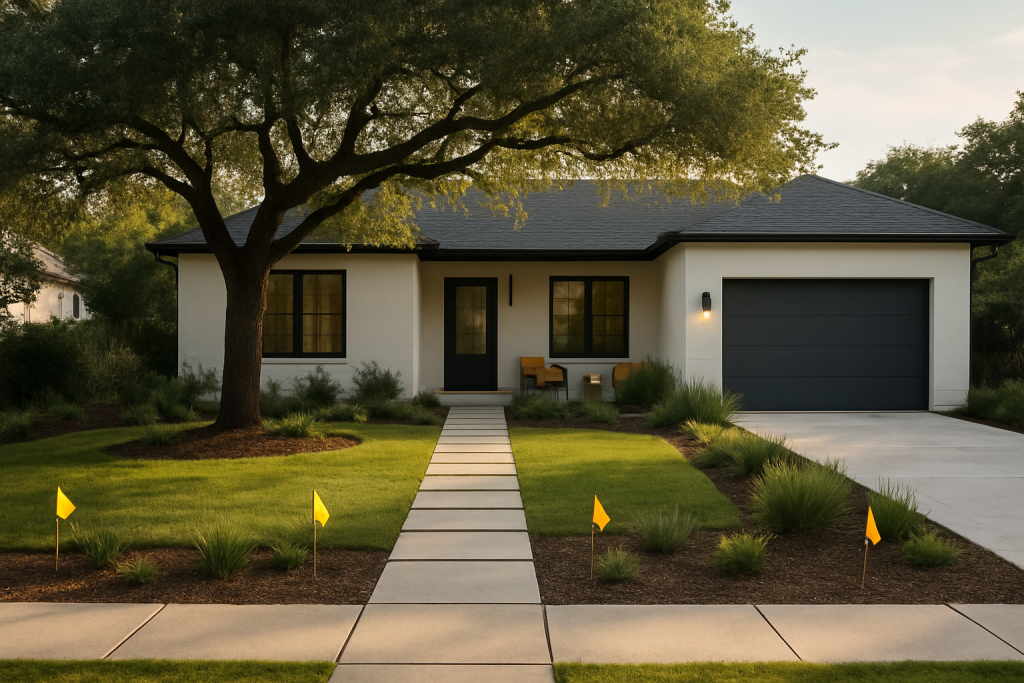
A simple plant swap that follows the guidelines may move faster. Artificial turf, lighting, tree removal, retaining walls, front-yard hardscape, or a major bed redesign usually brings more questions.
The most common delay is an incomplete application. Missing product specs, unclear boundaries, no drainage note, or no explanation of street visibility can send the request back for revision.
We recommend checking the HOA calendar before scheduling installation. Do not order custom materials, remove lawn, or book hardscape work until approval is in writing. Verbal approval is not the same thing.
Choices that get rejected most often
HOA rules vary, but we see the same pressure points in Austin front yards. These choices are not automatically wrong; they just need to be selected and presented carefully.
Artificial turf in the front yard
Artificial turf solves watering and mowing, but in Texas the deciding factors are heat, drainage, base preparation, and appearance from the curb.
HOAs may reject turf that looks too bright, has visible seams, covers too much of the front yard, or lacks a clear base and drainage plan. If you want turf, show the exact area, edge treatment, infill approach, and how runoff will move during heavy rain.
It is lower maintenance, not no maintenance. Leaves, dust, pet use, shade debris, and heat exposure still matter.
Gravel that looks unfinished
Rock and gravel can work well in Central Texas, especially in low-water designs. The problem is when the yard reads as bare rock instead of planned landscaping.
Large areas of unbroken gravel, loose rock spilling onto sidewalks, or material that clashes with neighboring yards can draw objections. Use borders, layered planting, and a clear maintenance plan so the design looks intentional.
Plants that fight the site
Some plants struggle in reflected heat, compacted clay soil, deep shade, or deer-heavy areas. Others grow too large for narrow front beds or block windows and walkways.
HOAs may also object to thorny plants near sidewalks, messy plants near entries, or anything that obscures sightlines. We look at mature size, not just nursery size, because a small plant today can become a maintenance problem later.
Lighting that creates glare
Good landscape lighting shows the effect and conceals the source. HOAs often push back on fixtures that shine toward the street, neighbor windows, or second-story bedrooms.
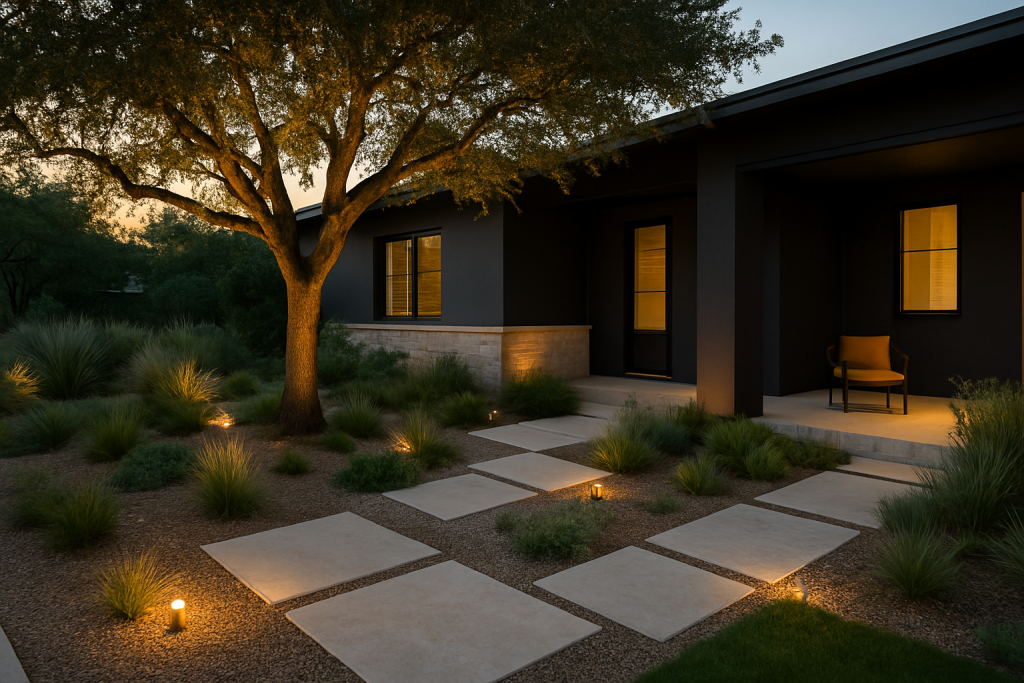
Keep front-yard lighting warm, low, and aimed down or into plant material. Path lights, subtle tree uplighting, and entry lighting usually review better than bright flood-style fixtures.
How to submit a cleaner request
A strong submittal answers the reviewer’s questions before they have to ask them. Keep it simple, complete, and easy to compare against the HOA guidelines.
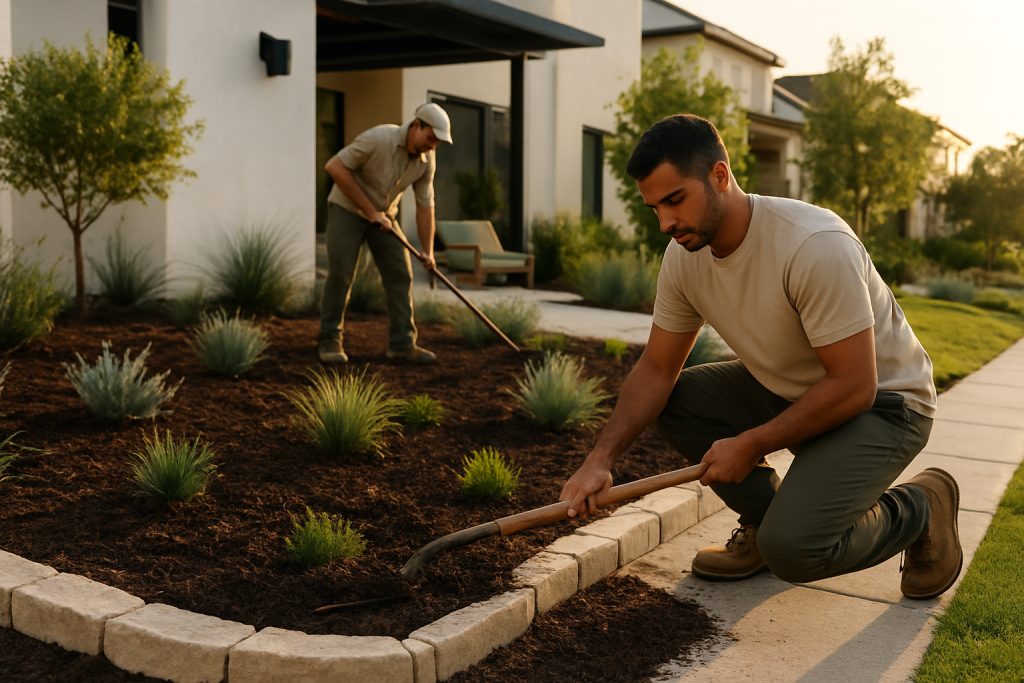
Include a short project summary, a marked-up plan, current photos, material samples, plant list, lighting specs if any, and a note about drainage. If irrigation will change, explain whether you are modifying zones, capping heads, or using drip in beds.
For front yards with live oaks, limestone, steep slope, or drainage toward the sidewalk, add a practical note about how installation will protect roots, maintain clearances, and keep runoff moving correctly.
Be honest about maintenance. A low-water bed still needs weeding, pruning, mulch or gravel upkeep, and seasonal adjustment. Reviewers want to know the yard will not look neglected after the first summer.
FAQ
Can I start work while waiting for HOA approval?
We do not recommend it. Many HOAs can require changes or removal if work starts before written approval. Get the approval first, then schedule the work.
Does replacing dead plants need approval?
Sometimes. If you are replacing the same plant in the same location, it may be treated as maintenance. If you change bed shape, plant type, turf, lighting, edging, or hardscape, submit it.
Will native or low-water plants always be approved?
Not always. Native and low-water choices help, but the HOA may still review mature size, placement, visibility, and whether the design matches community standards.
Want a front yard that can pass review?
A good HOA submittal is part design, part documentation. We help you choose plants, turf, stone, lighting, and drainage details that fit your Austin-area yard and give the review committee a clear plan to evaluate.
Planning a front-yard change in Austin or nearby Central Texas? Get your free estimate.