

A brown patch that is bigger than it was yesterday is rarely drought. Fall armyworms lawn treatment in Texas is mostly a timing problem, and the window is short. The caterpillars that turn a green patch of St. Augustine into stubble do most of that damage in a few days, and the difference between a small spot and a dead half-lawn is usually how fast someone works out what is eating it.
The failure we see most often is not a missed spray. It is a misdiagnosis. A brown patch in late summer gets read as heat or drought stress, the irrigation gets turned up, and the extra water pushes soft new growth that the next generation feeds on. By the time anyone kneels down and looks, the edge has moved.
Rather hand it off? See our Austin lawn care: mowing, feeding and weed control on a schedule that fits Austin's watering rules.
What to look at, in what order, at dawn, and what is worth doing in the first 48 hours.
What fall armyworm damage looks like
Armyworms chew. That one fact separates them from almost everything else that browns a lawn here.
- Ragged blades, not dry ones. Fresh damage is chewed from the edge. Early on you get window-paning, translucent patches where one side of the leaf is gone; it browns afterwards.
- Frass. Sawdust-like pellets in the thatch, on the driveway, in the pool skimmer. It is the most reliable evidence, and drought never produces it.
- An edge that moves. Mark the boundary with a flag and look again the next morning.
- Stubble. Hit spots are chewed to the stem, like a mower set too low.
The dawn check: armyworms, chinch bugs or drought
Fall armyworms feed at first light, again at dusk, and through the night. By mid-morning they have dropped into the thatch, which is why a lawn can look chewed and empty at the same time.
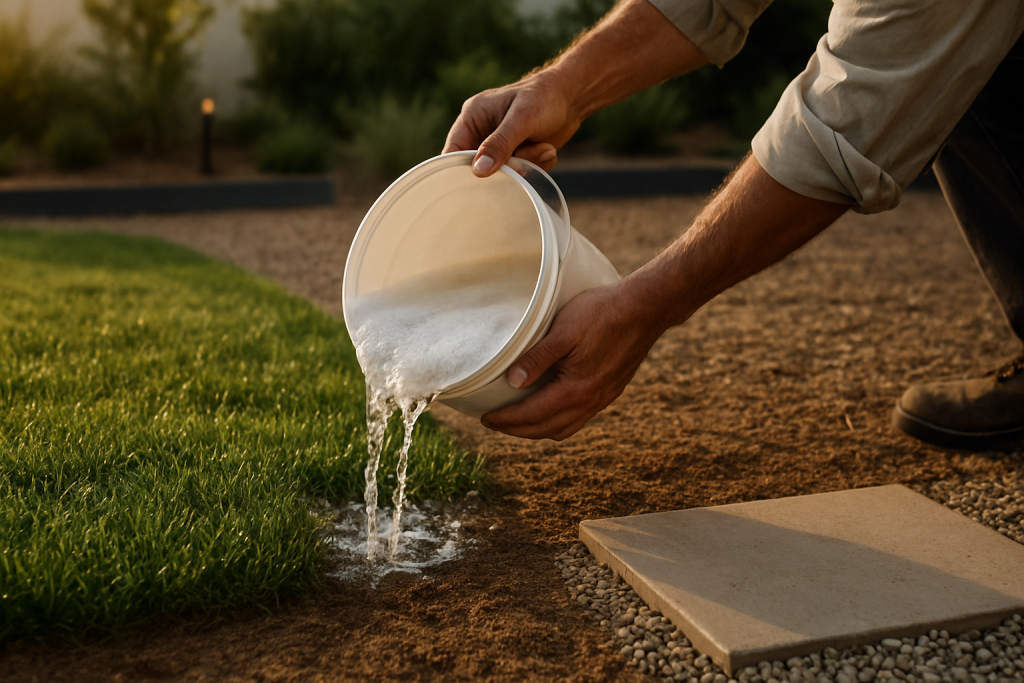
Run a soap flush
Mix roughly an ounce of lemon-scented dish soap into two gallons of water and pour it over about a square yard straddling the line between brown and green — the edge is where they feed. Wait two to five minutes. Caterpillars come up. Several in a square foot of edge is worth treating; one or two is worth checking again tomorrow. Rinse afterwards so the soap does not burn the grass.
Chinch bugs get blamed for this
Chinch bug damage also browns St. Augustine, and it also spreads. The difference is where: chinch bugs concentrate in the hottest, most reflected-heat ground — along the driveway, the curb, a south-facing slope with no afternoon shade. They suck sap instead of chewing, so there is no frass and no chewed stubble, and a flush brings up something small and black rather than a caterpillar.
What drought looks like
Drought browning is even and follows the irrigation pattern and the sun. Blades fold and go gray-green before they brown. There is no frass and no chewed edge, and the patch does not grow noticeably overnight.
The first 48 hours
Once you have caterpillars, the priority is the small ones, before they finish eating and drop into the soil where nothing you spray will reach them.
Mow and bag first
Cut the lawn and bag the clippings. Bigger larvae ride out a mower and land in the next strip, and piles of clippings give them somewhere to sit.
Spray in the evening
Bt, spinosad and chlorantraniliprole all work, and they behave differently: Bt has to be eaten and breaks down in sunlight, spinosad is fast but short-lived, chlorantraniliprole lasts longer and covers the next wave. Follow the label, and apply in the evening while the worms are on the blades. Hold irrigation for a day so the residue is not washed off before it is eaten.
What not to do
- Do not turn the water up. It does not help a chewed lawn and it invites the next generation.
- Do not fertilize a lawn that is being eaten; soft dark growth is what the moths chose in the first place.
- Do not spray on a schedule for the rest of the season. Repeated broad applications take out the beneficials doing part of the work.
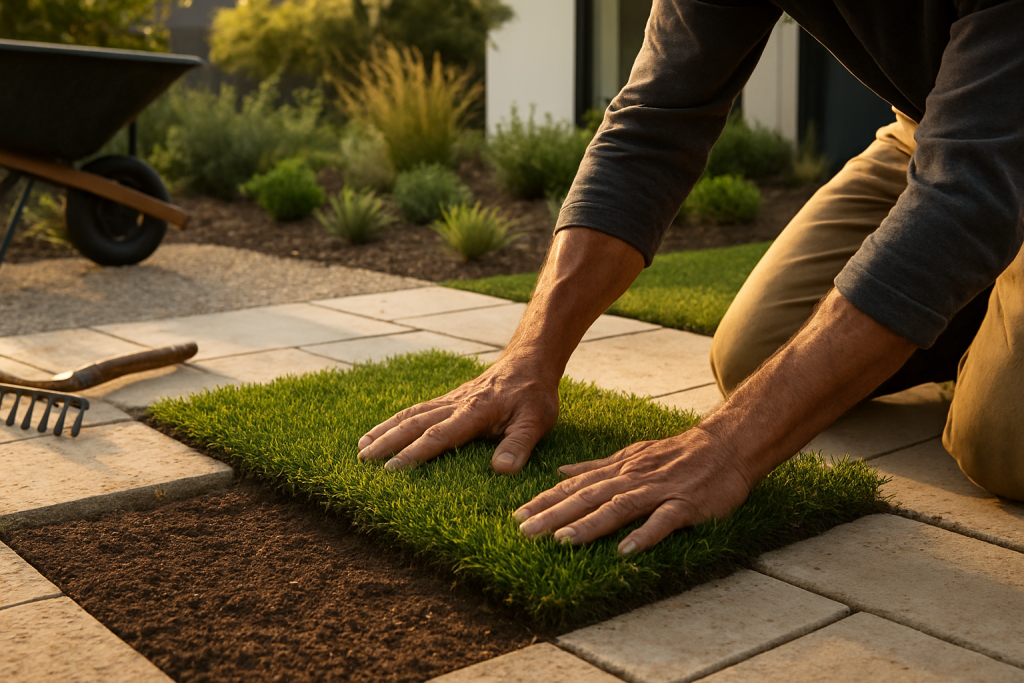
- Do not lay new sod while larvae are still active.
If you would rather have someone walk it with you, that is what our lawn care and treatment visits are for.
Why new sod and irrigated lawns go first
Moths lay on thick, dark green, well-watered turf, and new sod is exactly that: soft blades, little thatch, no established predators. Lawns next to pasture get hit earlier, because that is where the moths come from.

The generation matters more than the single spray. Larvae that survive drop into the top of the soil, pupate, and come back — expect another wave roughly three weeks later in warm weather. Walk the same edges at dawn for a few weeks. That second check is the one people skip.
After the worms are gone
Water normally, not heavily. Bermuda fills back in from its runners; St. Augustine returns slowly from the edges and will not come back where the crowns are dead. Bare spots need re-seeding or re-sodding, and that waits until you have walked the lawn at dawn twice and found nothing.
Common questions we get about this
Can I do this myself?
The diagnosis, yes: the soap flush and a bagged mow are an hour of work. Treating it yourself works if you get the evening timing right and cover the edges. What people call us for is the identification, and the coverage on a lawn with a lot of shade and fence line.
When is the best time?
When the edge moves and you find frass, not a date on the calendar. Pressure builds in late summer and runs into fall here, but a lawn being eaten in early September needs attention that day.
What does it cost?
Any number quoted without seeing the property is a guess. Patch size, grass type and how much is already bare decide the work. The estimate is free, and it is where the number comes from.
Brown patch getting bigger every morning? It is usually not drought. Walk it at first light, and if you find caterpillars on the blades we will tell you what it needs. Get your free estimate.