
By the Innovation Grounds team
Most bulb advice online was written for a garden where the ground freezes solid. That is not the problem here, and it is why so many tulips planted around Austin never come back. If you are looking for when to plant tulips in Texas, the short answer is late November into December — later than the catalogues suggest.
Planning something like this for your own yard? Our team does Austin landscape design, from the first sketch to the last plant.
The reason is soil temperature, not the calendar. A bulb roots while the soil is cool and still workable, then waits out the coldest weeks before pushing leaves. Plant in early October and the soil is warm enough that the bulb grows top before it has roots beneath it; the first freeze then burns the leaves that were paying for the flower.
Here is the window we plant to, what chill hours do to tulips versus daffodils and iris, and what a bulb needs in Blackland clay.
Planning a bulb bed for your own yard? Our team preps beds and sets bulbs around Austin, from Round Rock to Cedar Park. Start with an estimate at https://innovationgrounds.com.
The window runs from late November into December
Soil temperature is the trigger. In Central Texas the ground stays warm well into October, and a bulb that goes in then starts growing leaves it cannot feed. We generally start once the first real cool front has passed and the soil feels cool to the touch, and we are still planting through mid-December.
Late is safer than early. A bulb planted in December roots through a mild winter and flowers a little later; one planted in September has spent weeks in warm, wet clay by the time the cold arrives.
Order for November delivery if you can. Bulbs that arrive early keep in a paper bag in a cool, dark, dry place, not on a garage shelf next to the gas can.
Chill hours decide whether tulips come back
Tulips need a stretch of cold soil to reset the flower inside the bulb. Austin winters do not reliably deliver it — a mild December followed by a week of seventy-degree afternoons in January is a normal year here, and the hybrid tulips in most catalogues were bred for colder ground.
So we treat most tulips as annuals. The honest part: a Darwin or Triumph tulip usually gives a good first spring and a thinner second one, and after that it is a leaf or two and no flower. Buying them the way you buy pansies keeps you from spending three years waiting.
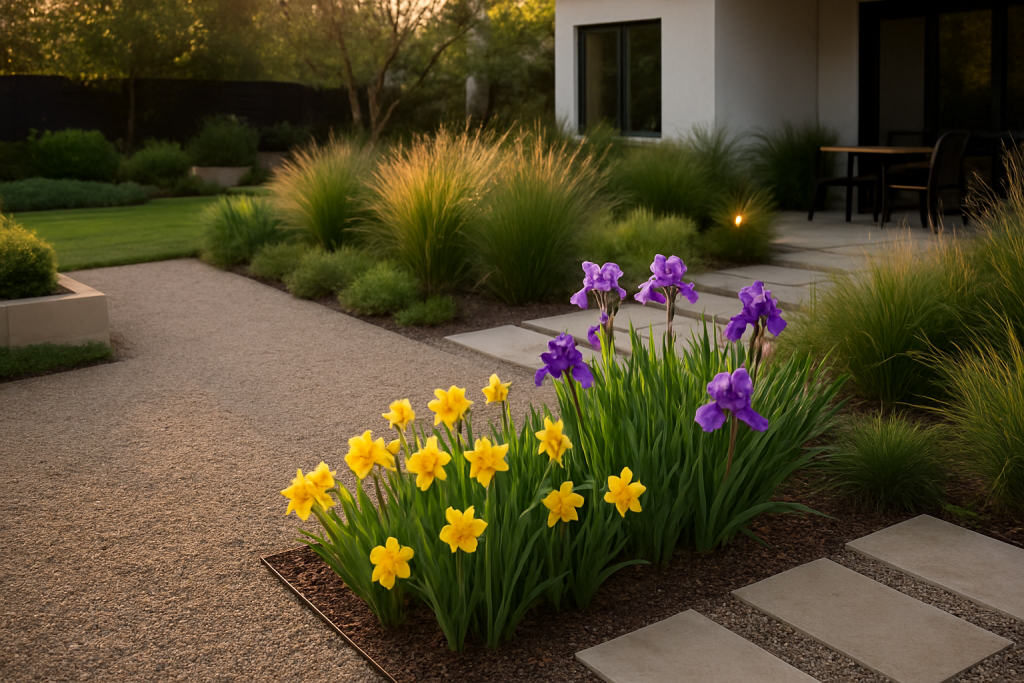
Daffodils are a different plant. Narcissus takes warm winters, multiplies, and the deer and squirrels leave it alone. Bearded iris, set as a rhizome with its top half above the soil, wants sun and drainage and will also spread. Those are the bulbs to lean on for a bed that fills in.
Depth and drainage in Blackland clay
Plant at two to three times the height of the bulb — four to six inches for a big tulip, about three for a small species bulb. And never drop a bulb into a narrow hole in clay.
Blackland clay is a bowl. Water moves through it sideways, slowly, and sits in any pocket you dig, so a bulb in an augered hole sits in its own bath until spring and rots. We see it most springs: clean, firm bulbs in November, a bed of gaps in March.
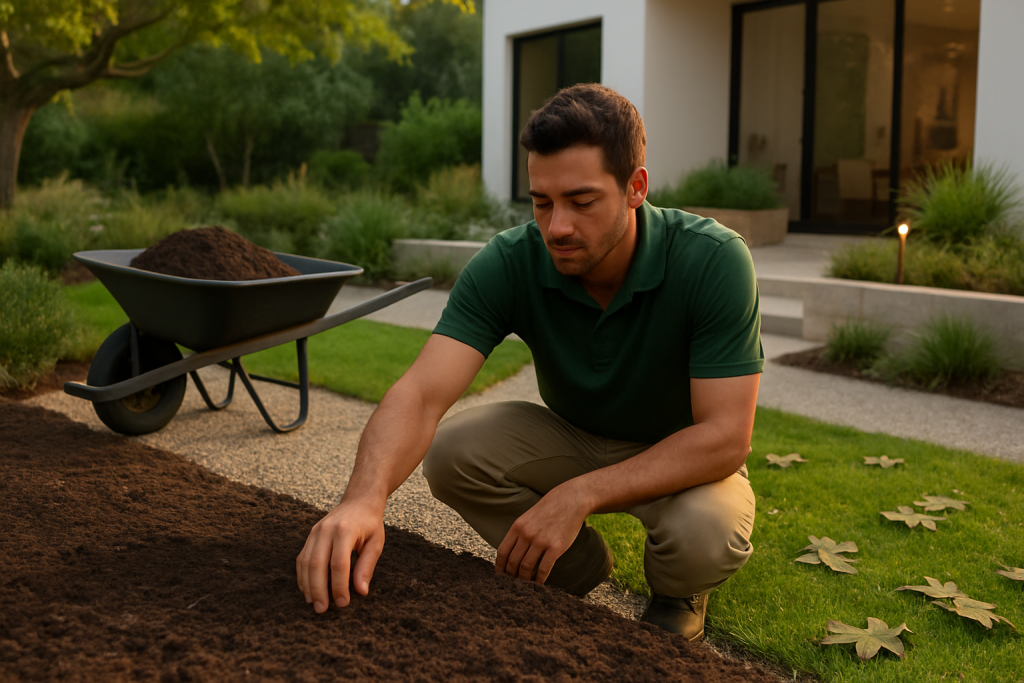
The fix is width more than depth. Loosen the whole planting area eight to ten inches down instead of drilling holes, work in compost until the soil crumbles rather than smears, and set the bed slightly raised so water runs off. Grit mixed through the bed helps; a handful in a hole does not.
Set the bulb above the water line
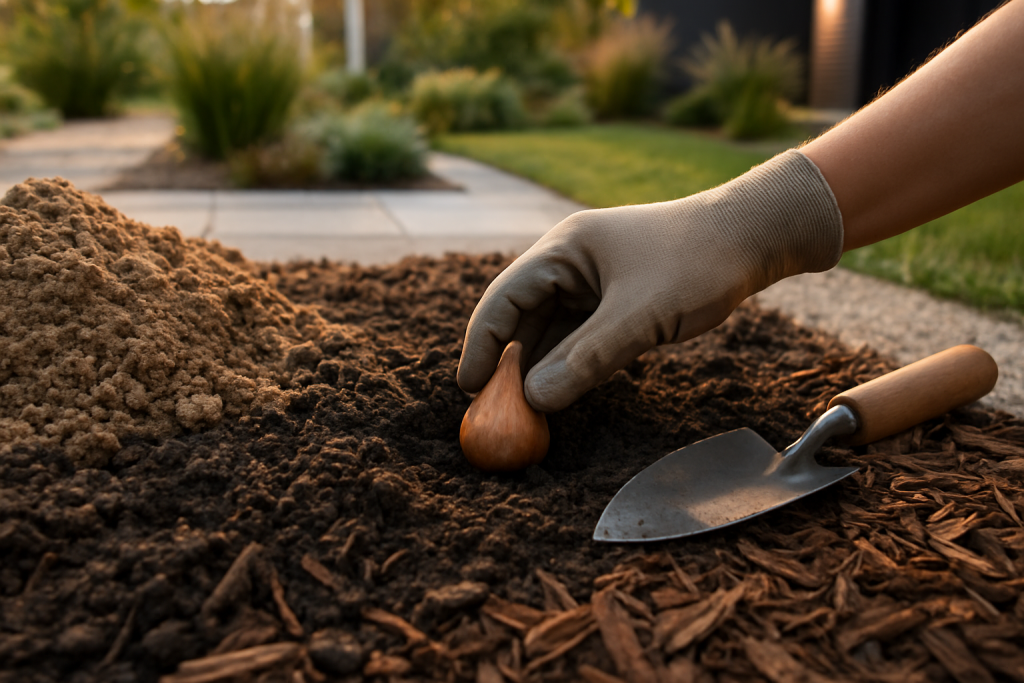
In an existing bed with heavy soil, set the bulbs on a mound of amended soil two or three inches above grade, so the bulb rests above the water line. Mulch two to three inches once the soil has cooled and let the rain do the rest. We skip bulb food — in our experience it mostly tells the squirrels where to dig.
What a second year actually takes
For tulips, cold you supply yourself. Pre-chilled bulbs are the simple route. The other is the refrigerator: a paper bag in the crisper for six to eight weeks, away from apples and anything else that ripens, then straight into the ground. Do not freeze them.
After bloom, leave the foliage until it yellows and pulls away with a light tug. That is the bulb refilling itself, and cutting it green is the most common way a second year disappears. Keep the spot dry through summer dormancy — one more argument for a raised bed.
FAQ
When exactly should I plant tulips in Central Texas?
Late November through mid-December, once the soil has cooled and the first cool fronts have come through. If you have to choose between early and late, choose late. Bulbs in the ground in early October spend too long in warm soil and often come up weak.
Can I grow tulips in a pot here?
Yes, and a pot is the easiest way to control both chill and drainage. Use fresh potting mix, a container with a real drainage hole, and bulbs that were pre-chilled. Keep it off a saucer that holds water and treat the tulips as annuals.
Do daffodils need digging every year?
No. Leave a clump alone until it stops flowering well, which usually takes several years. Then lift the bulbs after the foliage yellows, separate them and replant the biggest at the same depth. Cutting leaves back green is the fastest way to lose a bloom year.
Get your free estimate
If you would rather have the bed prepped and the bulbs set at the right depth the first time, our team does it across Austin and the towns around it. Get your free estimate from Innovation Grounds at https://innovationgrounds.com — any number quoted without seeing the property is a guess.