
Landscaping in Bee Cave and West Austin comes with a constraint most of the metro does not have: much of it sits over the Edwards Aquifer recharge zone, and what you build is regulated accordingly.

Impervious cover is limited
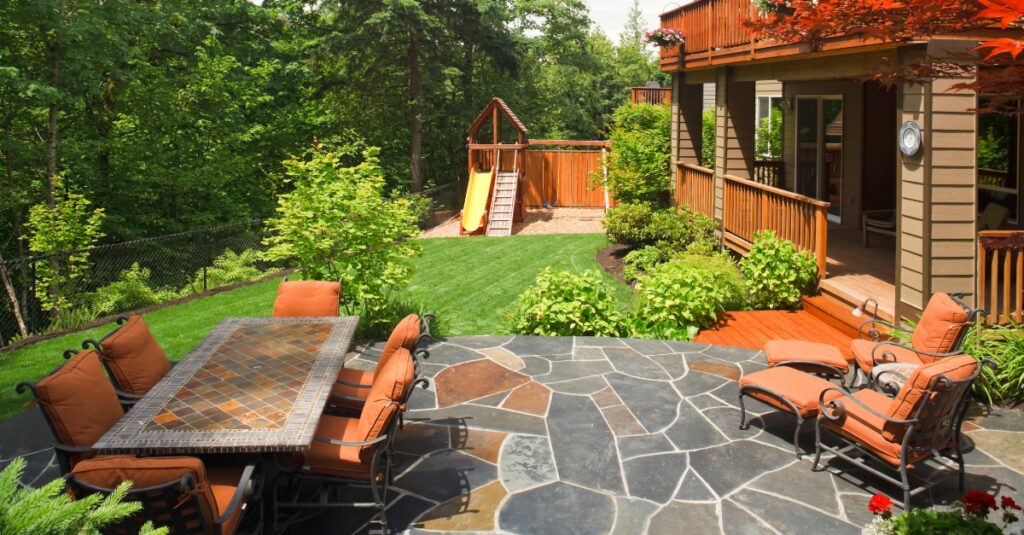
Over the recharge zone, the proportion of a lot that can be covered with impervious surfaces is restricted, because rainfall soaking through here feeds the aquifer. Patios, driveways and roofs all count.
Planning something like this for your own yard? Our team does landscape design in Austin, TX, from the first sketch to the last plant.
That pushes design toward permeable materials: decomposed granite paths, permeable pavers, gravel. Check limits before designing hardscape, not after, because redesigning a patio at permit stage is expensive.
Thin soil over limestone
Rock is often inches down. Planting holes hit stone, drainage is fast, and anything wanting steady moisture struggles. Build up with raised beds and planting pockets rather than trying to excavate.
The plants that thrive are the ones that evolved on this exact ground: Texas sage, agave, yucca, damianita, blackfoot daisy, cedar sage in shade. Our plant guide covers what works.
Slopes and erosion
Much of this area is hillside. Water moves fast across thin soil, and erosion is the constant background problem. Terracing, check structures and deep-rooted native planting hold ground far better than turf.
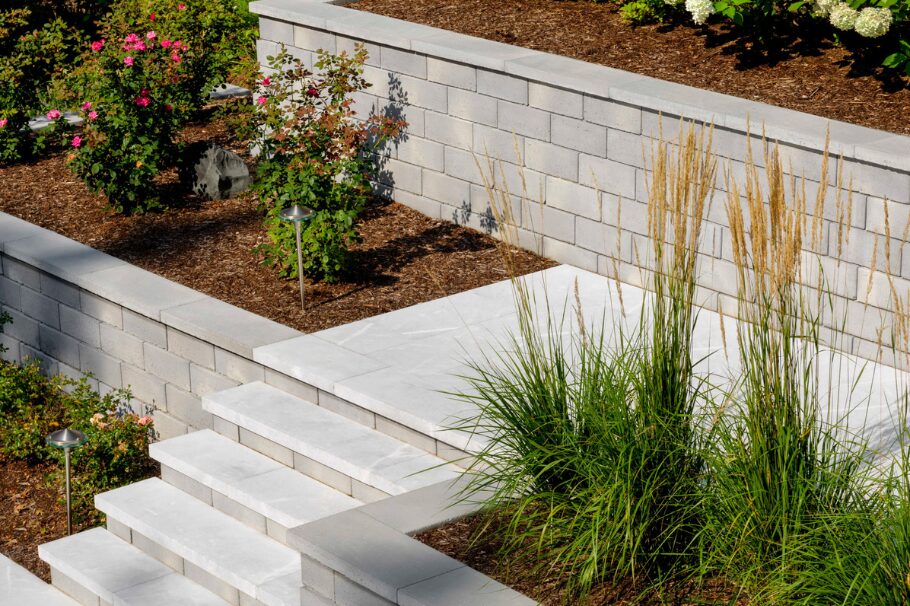
Retaining walls need proper drainage behind them, since hydrostatic pressure is what pushes walls over. See hardscaping and grading.
Water rules and wildlife
Check your provider is current restriction stage before planning irrigation, since schedules here differ from Austin proper. Drip in beds buys flexibility and uses far less.
Deer are a genuine design constraint in much of West Austin and Bee Cave. Plant selection has to account for browsing, or you will replace the same plants annually. See our Bee Cave page.
Deer, and designing around them
Deer pressure across Bee Cave, West Lake Hills and much of West Austin is heavy enough to be a primary design constraint rather than an afterthought.
Nothing is genuinely deer-proof under enough pressure, but some plants are reliably unappealing: Texas sage, agave, yucca, rosemary, salvias, lantana and most aromatic herbs. Deer avoid strong scents and tough or spiny foliage.
Protect new plantings regardless of species, since deer sample anything unfamiliar and young growth is more tender than established foliage. Temporary caging through the first season saves plants that will be ignored once mature.
Fire and defensible space
Hill Country lots with heavy Ashe juniper carry real wildfire risk, and landscape design is part of managing it.
Keep the zone immediately around structures clear of flammable vegetation, use gravel or low-fuel plantings close in, and maintain a gap between tree canopies and the roof. Remove dead material and thin dense juniper stands near buildings.
This works against the instinct to screen everything for privacy. The compromise is to screen at a distance from the house rather than immediately against it, which achieves both goals.
Working with the rock rather than against it
Exposed limestone is an asset most people try to hide. Outcrops, ledges and boulders give a property character that cannot be manufactured, and building the design around them costs less than excavating them.
Planting pockets between rocks, terraced beds that follow existing ledges, and paths that route around outcrops all read as belonging to the site. Blasting or hauling rock to create a flat lawn is expensive and produces something generic.
The same logic applies to slope. Terracing with the contour is cheaper and more stable than cutting large flat platforms, and on the recharge zone it also keeps impervious cover down, which is a regulatory advantage as well as an aesthetic one.
Common questions we get about this
Three come up almost every time.
Can I do this myself? Usually part of it. The diagnostic work and the finishing details are where experience shows, and the preparation underneath is where shortcuts cost the most. Most homeowners who do it themselves succeed on the visible work and struggle with base preparation, drainage and timing.
When is the best time? In Central Texas, almost always autumn. Soil is still warm, air has cooled, and anything planted or installed has months to settle before summer stress arrives. Spring works but races the heat.
What does it cost? Any number quoted without seeing the property is a guess, because our two soils, the slope and the access change the work substantially within a few miles. What we can say is that the invisible preparation is where the real cost sits, and where the cheapest bid has usually economized.
How this fits the rest of your yard
Almost nothing in a Central Texas landscape works in isolation, and the most common reason a well-executed project disappoints is that something adjacent to it was left unaddressed.
Soil sits underneath everything. Compacted ground defeats good planting, good irrigation and good drainage equally, which is why core aeration and compost keep appearing in otherwise unrelated recommendations. If the soil cannot accept water, nothing above it performs.
Water is the second thread. Your utility sets the days you may irrigate, your soil sets how fast it can absorb, and those two facts together determine what the landscape can realistically be. A plan that ignores either produces a yard that survives on effort rather than on design.
And timing runs through all of it. Autumn is the productive season here for planting, sod, soil work and oak pruning. Spring is busier and harder because everything installed then races the summer. Shifting work into the cooler months is the single cheapest improvement most homeowners can make to their results.
If you are weighing one project against another, the order that usually pays best is drainage and grading first, soil second, planting third and decorative elements last. It is the least satisfying sequence and the one that avoids paying twice.
Building over the recharge zone?
We check impervious cover limits before designing hardscape.