
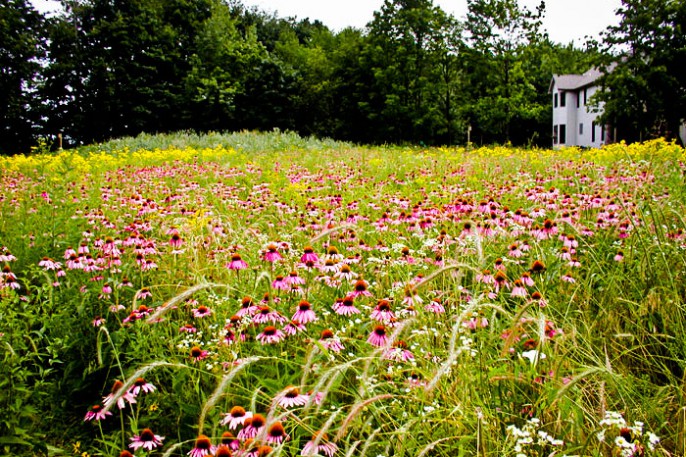
Liberty Hill lots are often large enough that landscaping the whole thing is neither affordable nor sensible. The skill is deciding what to develop and what to leave alone.

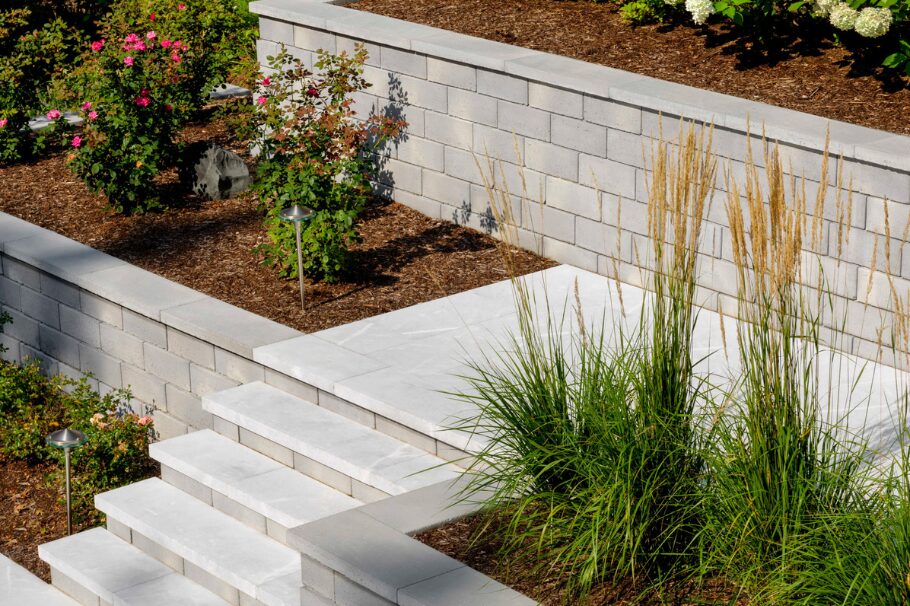
Zone the property
Concentrate investment near the house, where you actually live and where visitors see it. Beyond that, transition to lower-maintenance planting, and beyond that leave native vegetation largely alone.
Planning something like this for your own yard? Our team does Austin landscape design, from the first sketch to the last plant.
That three-zone approach costs a fraction of treating five acres as a garden and generally looks better, because the natural areas provide the setting the designed area sits in.
Water is the binding constraint
Many rural lots here run on well water, which makes irrigation a very different calculation from a city supply. Extensive irrigated turf is rarely realistic.
Design for rainfall once established. Native and adapted planting, heavy mulch, and drip only where it is genuinely needed. Rainwater harvesting makes more sense on a large roof than on a small suburban one.
Soil and clearing
Thin caliche over limestone in much of the area, with pockets of better soil. Test with a hole and water before assuming anything.
Ashe juniper clearing is a common request. Worth thinking through: on thin soil the junipers may be holding what soil exists, and clearing everything can accelerate erosion. Selective clearing usually beats wholesale removal.
Wildlife and fire
Deer browse heavily on larger lots. Plant selection has to account for it or you will replace the same things annually. Fencing the areas that matter is often cheaper than repeated replanting.
Defensible space around structures matters more here than in town: keep flammable vegetation away from the house, maintain gravel or low-fuel zones close in, and keep tree canopies clear of the roof. See tree care and our Liberty Hill page.
Well water and what it means for design
On well water, irrigation is limited by what the well can actually deliver, not by what a controller can be programmed to run. Flow rate and recovery determine how many zones you can run and how long.
Get the well tested for both flow and quality before designing anything. Hard water and high mineral content are common here and affect drip emitters, which clog, and some plants, which show mineral burn.
Design conservatively. A system sized to the well is one that keeps working through a dry summer; a system sized to the landscape you wanted is one that runs the well dry in August, which is expensive and occasionally damages the pump.
Roads, access and dust
Long private drives are a real maintenance item on rural lots. Gravel drives need regrading and topping, and a poorly built one becomes impassable after heavy rain.
Culverts where the drive crosses a drainage line need sizing for actual storm flow, not for a typical rain. Undersized culverts wash out and take a section of drive with them.
Dust matters more than people expect if the drive passes near the house or outdoor living areas. Stabilized surfacing on the sections nearest the house, with plain gravel further out, is a common and economical compromise.
Native areas as an asset, not neglect
The mistake on large lots is treating unlandscaped areas as unfinished. Native Hill Country vegetation is the setting the designed areas sit within, and it costs nothing to maintain.
What it does need is management rather than intervention: selective thinning of dense juniper, control of invasive species, and mown paths that make the area accessible and signal that it is intentional.
A mown edge where the designed area meets the native area is the single detail that makes the whole thing read as a designed landscape rather than a mowed patch surrounded by scrub. It costs almost nothing and changes the perception entirely.
Common questions we get about this
Three come up almost every time.
Can I do this myself? Usually part of it. The diagnostic work and the finishing details are where experience shows, and the preparation underneath is where shortcuts cost the most. Most homeowners who do it themselves succeed on the visible work and struggle with base preparation, drainage and timing.
When is the best time? In Central Texas, almost always autumn. Soil is still warm, air has cooled, and anything planted or installed has months to settle before summer stress arrives. Spring works but races the heat.
What does it cost? Any number quoted without seeing the property is a guess, because our two soils, the slope and the access change the work substantially within a few miles. What we can say is that the invisible preparation is where the real cost sits, and where the cheapest bid has usually economized.
Large lot, limited budget?
Concentrate the work where you live. Leave the rest native.