

A lawn that is uncomfortable to walk on and scalps every time you mow is usually not a grass problem. On Central Texas clay it is almost always the ground underneath moving.

Why it happens here
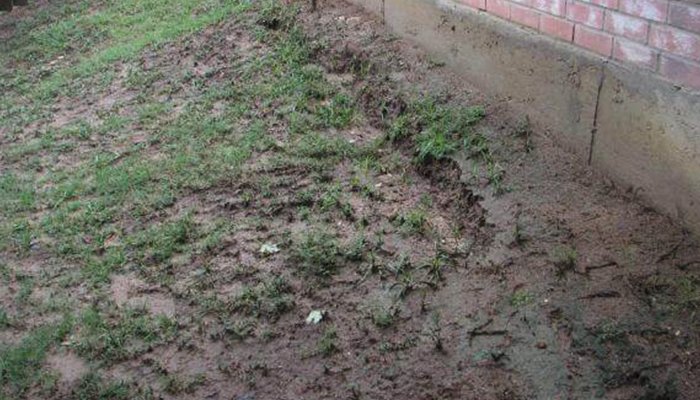
Blackland clay swells when wet and shrinks when dry, and over years that cycle leaves an uneven surface. Add construction settling, old trenches from utility work, and ruts from equipment during the build, and most yards have some of all three.
Rather hand it off? See our lawn care services in Austin, TX: mowing, feeding and weed control on a schedule that fits Austin's watering rules.
Other causes worth ruling out: a broken irrigation line washing soil away underground, tree roots near the surface, and animal activity. Each needs a different fix, so identify before you level.
Top dressing for shallow dips
For anything under an inch or two, top dressing solves it gradually. Spread a thin layer of compost or a sand-compost blend over the low areas, no more than half an inch at a time, and let the grass grow through it. Repeat over several sessions.
Doing it right after core aeration works best, since the material falls into the channels. Going thicker than half an inch in one pass smothers the grass, which turns a bumpy lawn into a bare one.
Deeper problems need the sod lifted
For dips over a couple of inches, cut and lift the turf, fill and compact underneath, then lay the sod back. It is more work but it is the only thing that fixes a real depression permanently.
If the whole yard slopes wrongly or water collects, that is grading rather than levelling, and the fix is property grading before any turf work. Levelling a lawn that drains toward the house solves nothing.
Do it when grass is growing
Top dressing and sod work both need the lawn actively growing so it recovers and knits. In Central Texas that means late spring through summer for warm-season grass, not fall or winter.
And check the sprinkler heads afterward. Levelling changes grade around heads, and a head now sitting an inch low sprays into grass instead of over it.
Diagnose before you level
Levelling a lawn that is bumpy for the wrong reason wastes the work. Walk it and look for patterns. Long narrow depressions usually mean an old utility trench that settled. Circular soft spots can mean a broken irrigation line washing soil away underground.
Ridges following a line from a tree are surface roots, and burying those with soil damages the tree. Small mounds scattered randomly often mean animal activity below the surface.
Check the sprinkler system first if any low area stays wet. A leaking lateral line erodes soil from beneath and produces a depression that will simply return after you fill it, because the cause is still running.
The material to use
For top dressing, a blend works better than any single component. Straight sand on clay is the classic mistake and produces something close to concrete. Straight compost is excellent for soil but settles considerably and can be too rich for levelling.
A sand and compost blend, roughly balanced, gives you material that levels and also improves the soil it lands on. Screened topsoil blended with compost is the other common option and behaves similarly.
Whatever you use, match its texture roughly to your existing soil. A layer that is dramatically different creates a boundary that roots and water struggle to cross, which produces a lawn that dries out in the top inch while staying wet below.
Doing it without killing the grass
Half an inch at a time is the working limit. Spread it with the back of a rake or a levelling drag, working it down between the blades so grass shows through.
Water afterward to settle the material into the canopy, and let the lawn grow through before repeating. Repeat sessions over a growing season handle most bumpy lawns; trying to fix it in one thick pass smothers what you were trying to save.
Do it while grass is actively growing so it recovers, which here means late spring through summer for warm-season species. Levelling a dormant lawn in November leaves bare soil open to winter weeds with nothing growing to close it.
Common questions we get about this
Three come up almost every time.
Can I do this myself? Usually part of it. The diagnostic work and the finishing details are where experience shows, and the preparation underneath is where shortcuts cost the most. Most homeowners who do it themselves succeed on the visible work and struggle with base preparation, drainage and timing.
When is the best time? In Central Texas, almost always autumn. Soil is still warm, air has cooled, and anything planted or installed has months to settle before summer stress arrives. Spring works but races the heat.
What does it cost? Any number quoted without seeing the property is a guess, because our two soils, the slope and the access change the work substantially within a few miles. What we can say is that the invisible preparation is where the real cost sits, and where the cheapest bid has usually economized.
Lawn uncomfortable to walk on?
We will tell you whether it needs top dressing or grading.