
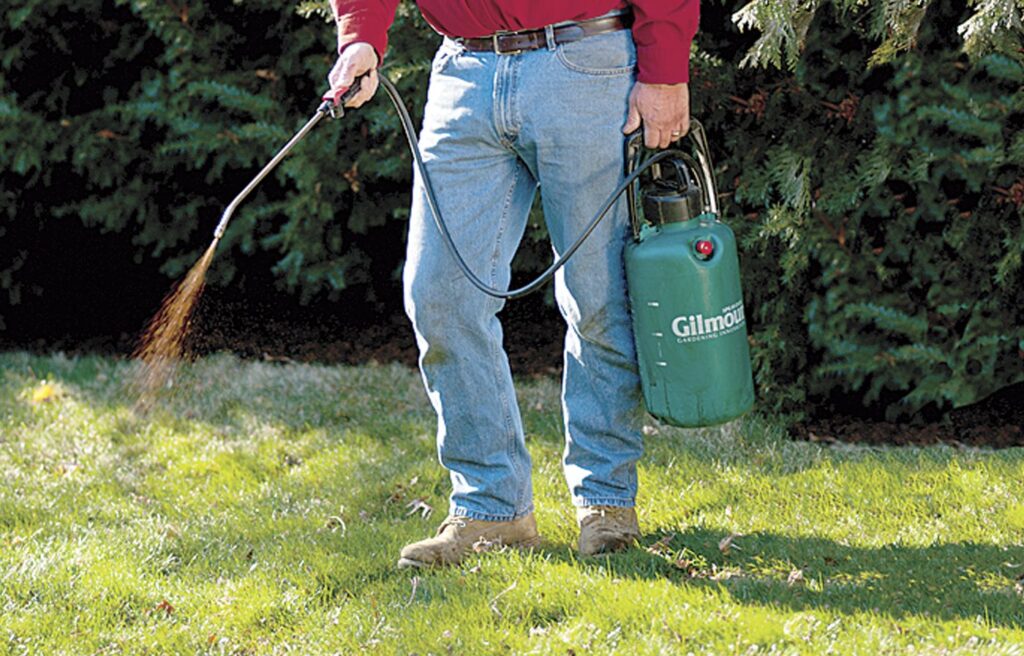
Most lawn products treat symptoms. Soil treatment addresses the thing producing the symptoms, and in Central Texas that is usually compaction and alkalinity rather than a nutrient shortage.

Test before you treat
A soil test through your county extension office costs very little and reports pH and nutrient levels. Doing it once ends years of guessing from bag labels.
What it usually shows here: alkaline pH, adequate phosphorus and potassium, and low organic matter. That combination means the standard reflex, more nitrogen fertilizer, is often addressing the wrong thing.
Organic matter is the real lever
Compost top-dressing is the single most effective soil treatment on both of our soils. On clay it improves structure and drainage; on caliche it adds the organic matter that is almost entirely absent. About a quarter inch after core aeration so it reaches the root zone rather than sitting on top.
This is slow and unglamorous. Two or three seasons of it produce changes that no single application matches, and it is cumulative in a way that fertilizer is not.
What not to bother with
Do not try to change the pH of an entire lawn. Sulfur applications at that scale are expensive, temporary and largely futile against our soil chemistry. Work with alkalinity instead: use chelated iron, which stays available at high pH, and choose adapted plants in beds.
Sand added to clay to improve drainage is another classic mistake. In the ratios homeowners apply it, the result is closer to concrete than to loam.
Compaction is the other half
You can have perfect soil chemistry and a lawn that still fails, because compacted ground stops roots and water regardless of nutrients. Newer subdivisions are the worst offenders, since construction equipment compacted the lot before the sod arrived.
Annual core aeration plus compost is the combination that actually changes things. Everything else, including most liquid soil conditioners sold for this purpose, is marginal by comparison. See lawn care for how it fits the yearly schedule.
Reading a soil test
Two numbers matter most here. pH tells you whether nutrients are chemically available; in most of Central Texas it will read alkaline, which locks up iron and some micronutrients regardless of how much you apply.
Organic matter percentage tells you how much biological capacity the soil has. Our native soils typically test low, and that single figure explains more lawn problems than nutrient deficiencies do.
Phosphorus and potassium usually test adequate here, which means the standard complete fertilizer is applying two nutrients you did not need. A test once every few years lets you buy what the soil actually lacks rather than a generic blend.
Biological approaches and what they do
Compost tea, microbial inoculants and humic products all aim at soil biology rather than chemistry. The research on them is genuinely mixed, and results vary enormously with the underlying soil.
What is not in doubt is that adding actual organic matter works. Compost applied physically to the soil feeds biology and improves structure in a way that liquid products do not replicate. If the budget is limited, buy compost rather than a bottle.
Where liquid products can help is as a supplement on soil already being built with compost, not as a replacement for it. Treat them as an accelerator, not a foundation.
The realistic timeline
Soil improvement is measured in seasons, not applications. One round of aeration and compost produces a modest improvement. Three consecutive years produce ground that visibly holds water differently and grows a lawn that needs less of everything.
That timeline is why so many people give up on it and return to fertilizer, which produces a visible response within days. The fertilizer response is real and temporary; the soil change is slow and permanent.
The practical compromise most lawns need: keep feeding on the correct schedule while building soil in parallel, and expect to reduce the feeding over several years as the soil starts doing more of the work.
Common questions we get about this
Three come up almost every time.
Can I do this myself? Usually part of it. The diagnostic work and the finishing details are where experience shows, and the preparation underneath is where shortcuts cost the most. Most homeowners who do it themselves succeed on the visible work and struggle with base preparation, drainage and timing.
When is the best time? In Central Texas, almost always autumn. Soil is still warm, air has cooled, and anything planted or installed has months to settle before summer stress arrives. Spring works but races the heat.
What does it cost? Any number quoted without seeing the property is a guess, because our two soils, the slope and the access change the work substantially within a few miles. What we can say is that the invisible preparation is where the real cost sits, and where the cheapest bid has usually economized.
Treating symptoms every season?
Start with a soil test. We will read it with you.