
Two homeowners twenty minutes apart can follow identical advice and get opposite results. That is not bad luck. Austin sits on two fundamentally different soils, and almost every landscaping decision follows from which one is under your yard.
East: blackland clay
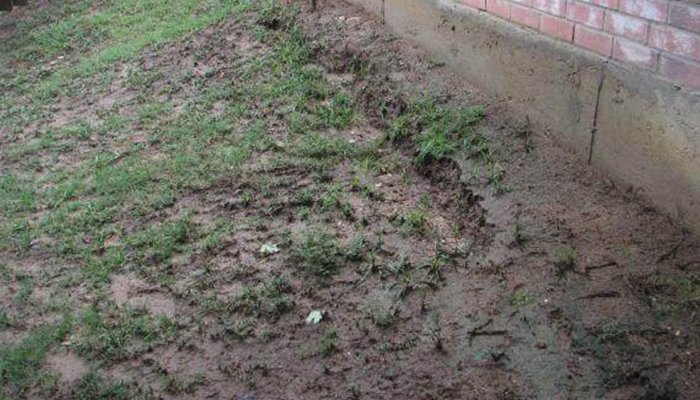
Hutto, Pflugerville, Manor and much of East Austin sit on deep, heavy clay. It holds water well, which sounds good until it rains hard and the water has nowhere to go. Then it dries, shrinks and cracks, and that swell-shrink cycle compacts it further each season.
Planning something like this for your own yard? Our team does landscape design in Austin, TX, from the first sketch to the last plant.
Here your enemy is drainage, not drought. Plants that tolerate dry rocky ground often rot over winter. Grading matters more than irrigation, and core aeration with compost top-dressing genuinely changes the soil over a few seasons.
West: caliche over limestone
Cedar Park, Leander, Bee Cave, Lago Vista and West Austin sit on thin soil over rock, sometimes only a few inches deep. Water drains almost immediately. Digging a planting hole often means hitting stone.
Here your enemy is drought and shallow rooting. Amending an entire yard is impractical; planting pockets and raised beds work better. Parts of this area also sit over the Edwards Aquifer recharge zone, where impervious cover limits affect how much hardscape you can add.
The test that settles it
Dig a hole about a foot deep and fill it with water. Time how long it takes to drain.
Under an hour and you are on the caliche side of the problem. Still holding water the next morning and you are on clay. That single measurement tells you more about what will survive in your yard than any plant tag will.
What changes because of it
Watering: clay wants fewer, longer sessions split into cycles so it can absorb; caliche wants shorter and more frequent. Planting: clay needs species that tolerate wet feet in winter; caliche needs true drought tolerance. Drainage: clay needs somewhere for water to go; caliche usually drains itself.
See our low-water plant guide for species grouped by what they actually tolerate, and drainage solutions if water sits in your yard after rain.
How to amend each one, and what not to bother with
On clay, the only thing that produces lasting change is organic matter added repeatedly. Compost top-dressing after aeration works because the material falls into open channels rather than sitting on the surface. Two or three seasons of that visibly changes how the ground absorbs water. Adding sand to clay does the opposite of what people expect and can produce something closer to concrete.
On caliche, amending the whole yard is impractical because there is almost nothing to amend. Build up rather than dig down: raised beds, planting pockets backfilled with good soil, and heavy mulch to hold what moisture arrives. Trying to excavate planting holes into limestone is expensive and usually produces a bathtub that holds water around the roots.
The same plant behaves differently on each
Texas sage thrives on caliche and can rot in clay that stays wet through winter. Turk’s cap tolerates both but needs more shade on the west side. Bermuda establishes readily on either but suffers on thin caliche during drought because there is no depth to root into.
This is why plant recommendations from a neighbor two neighborhoods over can fail completely. Before buying, ask which soil the advice came from. The most useful question at a nursery is not what is drought-tolerant, but what handles wet feet in winter and drought in August, because Central Texas asks for both from the same plant.
Not sure which soil you have?
We check drainage before recommending a single plant.