

St. Augustine is the most common lawn in Cedar Park and the one people struggle with most. When it thins, the reflex is more water and more fertilizer. Both usually make it worse. Here are the three real causes.
It is being cut too short
St. Augustine wants roughly 3 to 4 inches. Most mowers come set far lower, and a lawn cut at Bermuda height exposes its runners to sun, dries the soil faster and opens gaps for weeds.
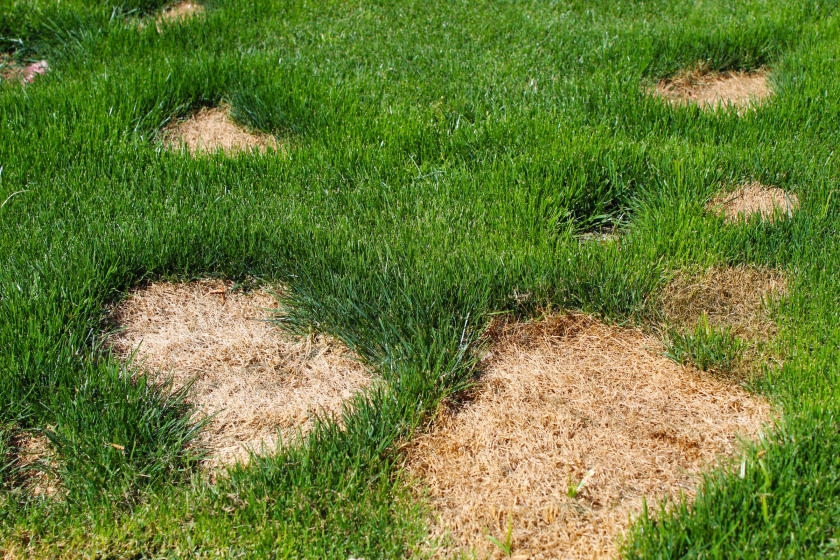
The pattern that gives this away: thinning that is even across the whole lawn rather than patchy, and weeds appearing in the thin areas within weeks. Raise the deck and much of it recovers on its own.
The soil is too thin for it
Cedar Park sits on caliche over limestone, sometimes only a few inches of soil. St. Augustine has shallow roots to begin with, so on thin soil it has almost nothing to draw from during a dry stretch.
This shows as thinning in the same spots every year, usually the highest and most exposed parts of the yard. Compost top-dressing after aeration helps. If it recurs annually in the same places, that area may simply be better served by low-water planting than by turf.
Take-all root rot
Spring, yellowing patches, and roots that pull up easily and look dark rather than white. It is a fungal problem that high nitrogen and scalping both make worse, which is exactly what most people apply when they see yellowing.
Compost top-dressing does more for it than fungicide. If you are treating and it is spreading, the treatment is probably aimed at the wrong problem.
Shade is not the problem people assume
St. Augustine is chosen for shade tolerance, which is real but limited. Under a mature live oak the combination of deep shade and aggressive root competition beats it, and thinning under the canopy is not a lawn care failure so much as a mismatch.
The tell is location: thinning that follows the canopy line rather than the sun-exposed areas. No mowing height or fertilizer changes that. What works is accepting the condition and switching that zone to shade-tolerant ground cover or mulched bed, which also stops you watering an area that will never hold turf.
Recovery, and how long it honestly takes
St. Augustine spreads by runners rather than seed, which means recovery is slower than people expect and cannot be accelerated by seeding. A thin lawn given correct mowing height and deep watering typically fills in over a full growing season, not in weeks.
If bare areas are large, plugs or sod are faster than waiting. Lay them when the grass is actively growing so the runners knit in, which in Central Texas means late spring through summer rather than fall.
The mistake that resets the clock is going back to a short cut once it starts recovering. Raise the deck and leave it raised.
Thinning lawn in Cedar Park?
We diagnose before treating, because three different causes look nearly identical.